Last week, I shared a LinkedIn post that sparked more debate than I expected.
The core message was simple:
Many highly qualified candidates don’t get interviews, not because they lack competence, but because they are unknown.
For some, this landed as a helpful reality check.
For others, it triggered strong reactions about fairness, nepotism, broken systems, and the erosion of meritocracy.
That reaction matters.
And it deserves a thoughtful response.
So let me clarify something upfront:
I was not judging.
I was not defending the system.
I was not saying this is how hiring should work.
I was pointing to how it does work.
Reality Is Not an Endorsement
There’s an important distinction we often miss in these conversations:
Describing reality is not the same as approving of it.
When we say “gravity exists,” we are not celebrating gravity.
We are acknowledging a force that shapes what is possible.
You can absolutely argue that gravity is unfair.
But if you step off a roof believing fairness will save you, reality will still win.
Hiring works the same way.
What Actually Happens in Hiring (Especially When Candidates Are Equal)
Here’s a detail that often gets overlooked:
Most hiring decisions are not made between a great candidate and a weak one.
They’re made between two (or more) candidates who look almost identical on paper.
Same education.
Same years of experience.
Same technical skills.
Same certifications.
When that happens, the decision rarely comes down to CVs.
It comes down to questions like:
Who do we feel more comfortable with?
Who feels less risky?
Who do I trust to work with when things get messy?
Who do I already have some context for?
And in those moments, people don’t choose “the best CV.”
They choose the most familiar human.
Not because they’re corrupt.
Not because they’re malicious.
But because humans reduce risk through familiarity.
The Critical Argument I Actually Agree With
Some of the strongest comments raised an important concern:
If networking is the first gate, and competence never gets evaluated, why should people invest in becoming excellent at their craft?
That’s a real incentive problem.
If access determines visibility, and visibility determines opportunity, then the system does reward the wrong behaviors.
Over time:
Organizations hire people who mirror their circles
Capability narrows
Diversity of thinking drops
Long-term performance suffers
On this, I agree completely.
My post was never meant to deny this risk.
But There’s a Tension We Can’t Ignore
There are two different conversations happening at once—and they often get mixed up:
What organizations should fix
What candidates can realistically do today
When I coach candidates, my responsibility is not to redesign the global labor market.
It is to help real people move forward in real conditions.
Telling someone:
“This system is broken, and you’re right to be angry”
…may be emotionally validating.
But it doesn’t get them hired.
Complaining About Gravity Doesn’t Change Gravity
You can be right and unemployed.
You can be principled and invisible.
You can wait for fairness, or you can work with reality while advocating for change.
The candidates who move forward fastest are not the ones who deny the system or glorify it.
They are the ones who see it clearly and act strategically.
They don’t apply blindly and hope merit will be noticed.
They build visibility before they need it.
They create context around their competence.
They make it easier for others to trust them.
Not because it’s morally perfect, but because it works.
This Is Not About Nepotism
Let’s be precise.
Nepotism is hiring despite incompetence.
Networking is ensuring competence actually gets seen.
Those are not the same thing.
The real problem isn’t relationships.
It’s lazy evaluation.
Healthy organizations don’t hire “people like us.”
They hire people who can solve the problems they actually have.
But until every hiring process lives up to that ideal, candidates still have to navigate the world as it is and not as we wish it to be.
A Practical Checklist for Candidates (What You Can Actually Do)
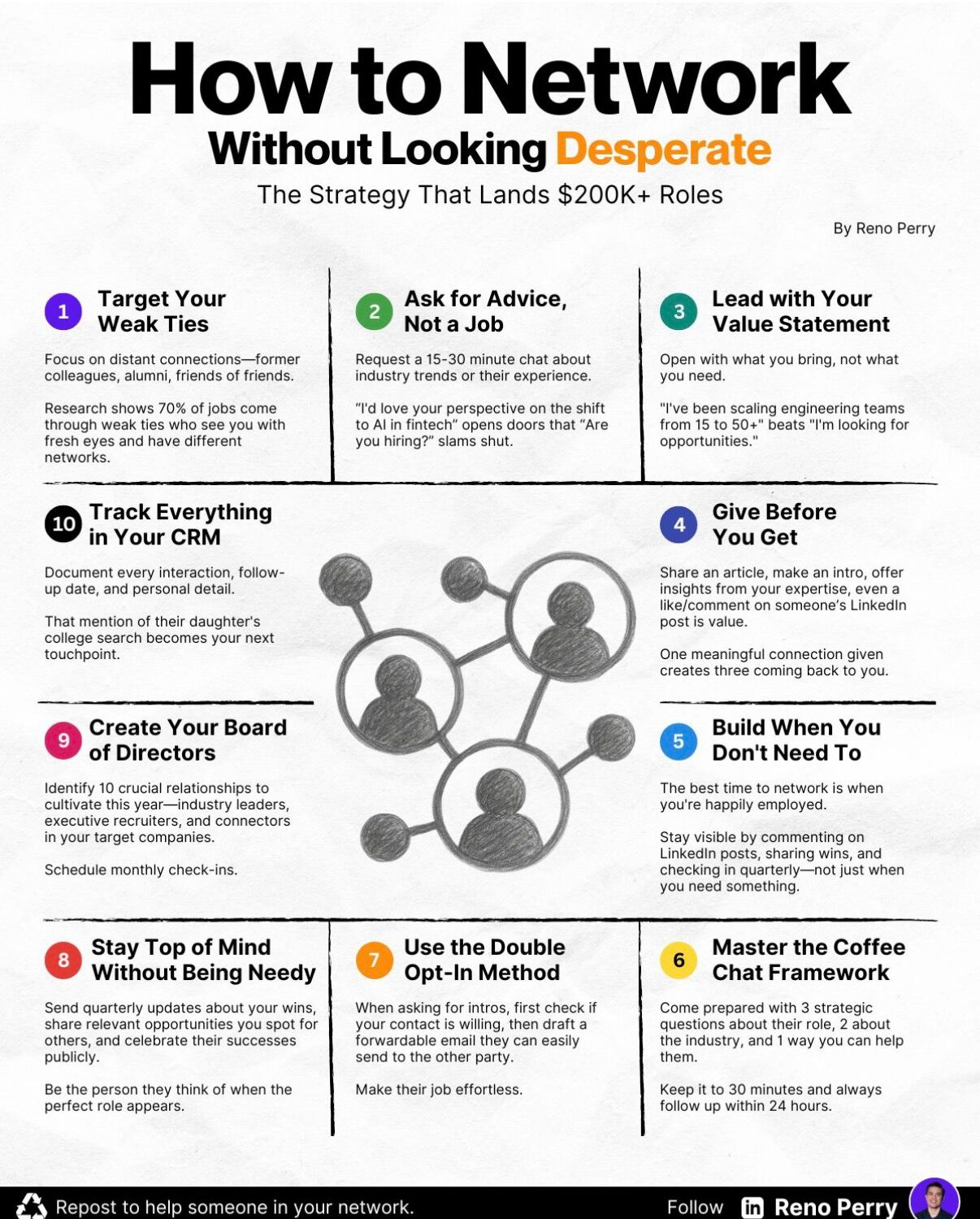
If you don’t want to rely on luck, here’s where to focus:
1. Stop Applying Blindly as a Default
Online applications are a last step, not a strategy.
If you apply without context, you’re betting on randomness.
2. Create Visibility Before You Need It
Don’t wait until you’re desperate.
Share what you’re working on
Comment thoughtfully on industry discussions
Make your thinking visible, not just your job title
3. Build Weak Ties (Not Awkward Networking)
You don’t need “best friends” inside companies.
You need:
Light relationships
Familiar names
People who can say: “I’ve seen this person think.”
4. Make It Easy for Others to Trust You
People trust what they can understand.
Be clear about what problems you solve
Speak in outcomes, not buzzwords
Show how you think, not just what you’ve done
5. Turn Competence into Context
Competence alone is invisible.
Context makes it legible.
Share stories, not bullet points
Explain decisions, trade-offs, and constraints
Let people see how you operate
6. Ask for Conversations, Not Jobs
Conversations reduce risk.
CVs don’t.
Curiosity opens more doors than applications ever will.
Two Messages. Two Audiences.
So let me be explicit:
To organizations and leaders:
Fix the game.
Design hiring processes where competence, context, and contribution are visible—without insider access.
To candidates:
Don’t wait for the system to become fair before you act.
Learn how it works.
Build relationships.
Create visibility.
Give your competence a fighting chance.
You are not betraying merit by doing this.
You are protecting it.
Final Thought
This was never about defending a broken system.
It was about refusing to lie to people navigating it.
Reality doesn’t care how fair we think it should be.
But once we acknowledge it, we gain something powerful:
Agency.
And from there, personal progress and systemic change become possible.
Looking for a coach?
In service of those who serve others.
Leadership is hard. Whether you’re stepping into management, leading an entire organization or wondering about your career, the challenges are real: confusing, overwhelming, and sometimes isolating.
I offer a tailored 1:1 or team coaching quarterly program to help you move forward with clarity and confidence. I’ve walked in your shoes, and I’ll work with you to build the resilience and relational skills needed to lead well, beyond just the work.
If this sounds like what you need, let’s talk. Email me at jose@facilistation.com to book a no-strings attached, no-obligation call to talk about your needs and see what I can offer that will fit you the best. Because coaching isn’t expensive. Staying stuck is.
You should see the cost of a life and work that you don’t love... sometimes one good conversation can change your life and your career forever.