Leadership is often portrayed as direction, authority, or control.
But the world we live in today—complex, interconnected, and constantly evolving—requires a different kind of leadership.
Not the leader as a commander.
Not the leader as the hero.
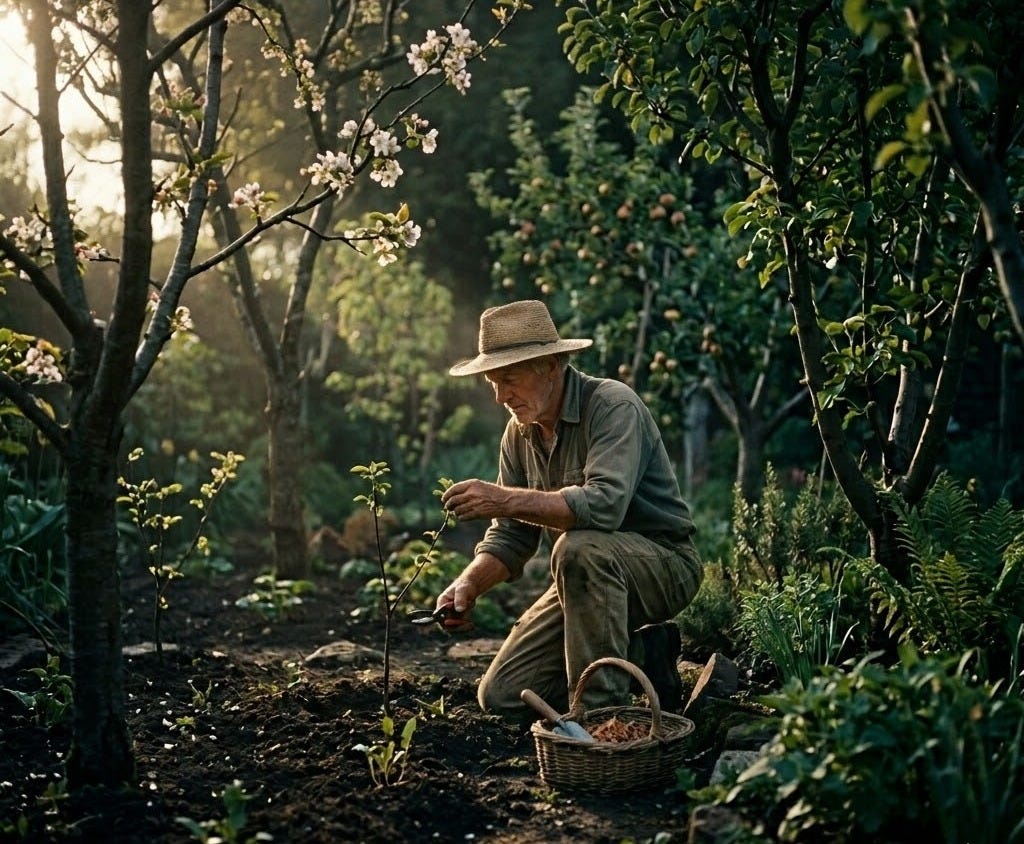
But the leader as a gardener.
Leadership Is About Cultivating the Conditions for Growth
A gardener does not pull plants to make them grow faster.
A gardener focuses on the conditions that allow life to flourish:
Soil
Water
Sunlight
Space
Care
In organizations, these conditions translate into the systems leaders create:
Processes
Technology
Culture
Structures
Meetings
Decision-making environments
Psychological safety
These are the garden beds of the organization. When they are healthy, people grow.
Conscious leadership is therefore less about managing people and more about cultivating the environment where people can do their best work.
Every Tree Is Different
A good gardener also knows something essential:
Every tree and plant is different.
Some trees are just beginning to appear from the ground.
Some are growing strong trunks and expanding their branches.
Some are mature and starting to bear fruit.
Each one requires something slightly different.
A young tree needs protection and support.
A growing tree needs space and nutrients.
A mature tree needs care so it can keep producing fruit.
The gardener pays attention.
Observes.
Adjusts.
Leadership works the same way.
Conscious leaders understand that people develop at different speeds, with different needs, motivations, and strengths. They take the time to care for each person individually, creating the conditions that allow them to grow into their potential.
Not by forcing growth.
But by nurturing it.
The Leader Makes the Invisible Visible
Another important role of the gardener leader is helping people see what they cannot easily see.
In organizations, many forces shape what happens:
Hidden assumptions
Unspoken tensions
Structural barriers
Cultural habits
Misaligned incentives
Invisible dependencies between teams
Most people are too busy doing their work to notice these dynamics.
A conscious leader helps make the invisible visible.
They help teams see:
What is really happening
What patterns are shaping their work
What obstacles are slowing them down
What opportunities are emerging
Once people see it, something powerful happens.
They can take responsibility.
And most importantly:
they can do something about it.
Making the Complex Simple Enough to Act
Modern organizations are incredibly complex systems.
Too complex, sometimes.
When complexity becomes overwhelming, people freeze.
They disengage.
They assume change is impossible.
The gardener leader does something crucial.
They make the complex simple enough to act on.
Not by oversimplifying reality, but by:
Clarifying priorities
Breaking big challenges into manageable steps
Creating shared understanding
Designing good conversations
Facilitating alignment
When people understand the situation clearly enough, something changes.
They begin to believe:
“Maybe we can actually do something about this.”
And belief is the beginning of action.
Facilitation: The Core Skill of Modern Leadership
This is why leadership today increasingly looks like facilitation.
The leader is not the person with all the answers.
The leader is the person who creates the space where the best answers can emerge collectively.
Just like a gardener does not create the plant—but creates the conditions where growth becomes inevitable.
Facilitating leaders:
Ask powerful questions
Design meaningful conversations
Create psychological safety
Align perspectives
Enable collective intelligence
They help the garden organize itself toward growth.
The Garden Is Never Finished
A garden is never “done”.
It is always evolving.
Seasons change.
New plants appear.
Old ones fade.
The ecosystem continuously adapts.
Organizations are the same.
Conscious leadership is therefore not about reaching a perfect state.
It is about continuous care, attention, and cultivation.
Observing.
Learning.
Adjusting.
Helping the garden keep growing.
The Leadership the World Needs Now
The challenges we face today—organizational, societal, environmental—cannot be solved by command-and-control leadership.
They require leaders who can:
See systems
Care for people
Enable collaboration
Facilitate collective intelligence
Cultivate sustainable environments where people thrive
In other words:
The world needs more gardener leaders.
Leaders who understand that their job is not to control the forest…
but to cultivate the conditions where the forest can flourish.
A Final Reflection
If leadership is a garden…
What kind of garden are you cultivating?
What conditions are you creating for the people around you to grow?
And what might become possible if your role as a leader was not to push harder…
but to cultivate better soil?
If you would like support designing leadership environments, workshops, or facilitation processes that help teams grow, align and flourish, feel free to reach out.
That is exactly the kind of garden I love helping organizations cultivate.