


This guest post is written by Marjorie Parker, an organizational development practitioner and facilitator based in Norway. Drawing on her experience working with leaders and teams, she shares how shared vision processes can help organizations move from intention to genuine engagement and action.
Facilitators are often invited into organizations at moments when something needs to change. The expectation is that a workshop or strategic planning process will generate new ideas and creative solutions. Yet even when such processes lead to clear action plans, engagement often remains limited. Participants may agree on next steps, but a deeper sense of commitment and shared direction is frequently missing.
One approach that can create stronger alignment, focus, and engagement is to involve a group in developing a shared vision around a specific organizational challenge. Rather than focusing first on problems or solutions, shared vision processes invite participants to imagine and experience a desired future together. This shift in perspective can unlock creativity, deepen commitment, and support more meaningful change.
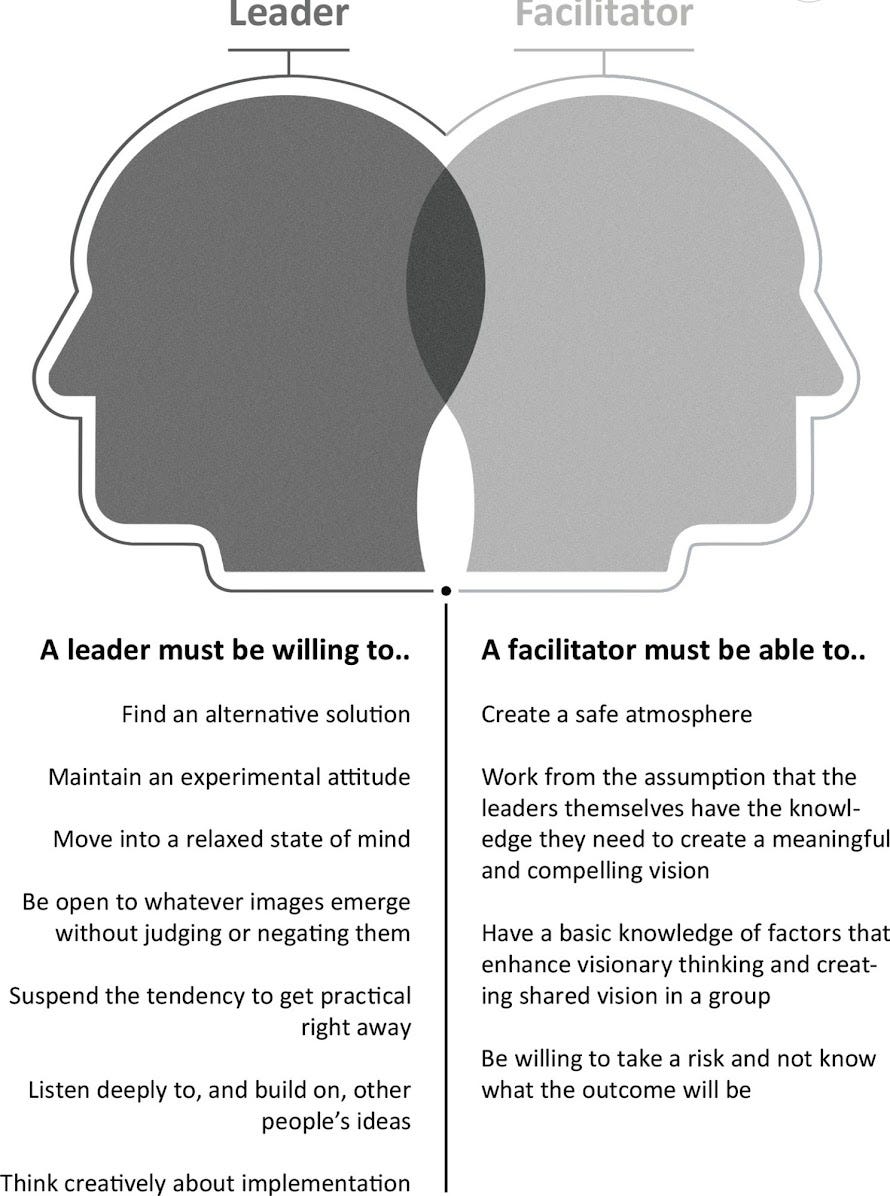
A shared vision is the collective image of a desired future held by a group — not merely a written statement or slogan, but a vivid internal picture of how things will look and feel when change has been realized. It provides an overarching framework that guides the choices people make today, choices that gradually transform vision into reality.
Visionary Thinking
For facilitators, the task is first to clarify the organizational challenge and then to create conditions in which participants can develop and share images of a desired future. This involves helping groups engage in visionary thinking.
Visionary thinking is the process through which we activate insight and imagination, connect with our values, and form mental images of a desired future. With the help of imagination, we mentally move forward in time and allow ourselves to see what is happening around us — how people are interacting, what feels different, what is unique about this new reality.
Facilitators support this process by helping participants enter a relaxed and reflective state of mind and by posing carefully chosen questions that stimulate imagination and insight. In such conditions, people are able to draw simultaneously on analytical thinking, intuition, and imagination — and discover possibilities that might otherwise remain just outside their awareness.
While a vision directs us toward the future, it exists only in the present — in our minds, right now. If these images align with our values, stir a sense of purpose, and make sense in the marketplace, they will engage both our emotions and our intellect and create within us an urge to act.
In a shared visioning approach, the implementation and planning phase of any change process becomes a learning process, one in which perspectives must continually shift between the shared vision and the immediate actions needed to reach it. If the visioning process has been successful - meaning that employees have together created, shared, and committed to a common mental image of the desired future - then something rather notable tends to happen: people begin generating ideas for action steps almost spontaneously, pulled forward by a vision they feel is genuinely their own.
Where Shared Vision Processes Are Useful
Shared vision facilitation can be valuable across many situations. Here are four examples.
Bringing Values to Life
Organizations often communicate core values through presentations or written statements, but employees may experience these as abstract or disconnected from everyday work. In one international company, leaders wanted the organization to become more responsive to both internal and external stakeholders. Rather than defining the value, participants were invited to move two years into the future and imagine how responsiveness had become part of their everyday interactions — how decisions were being made, and how customers and partners were noticing the change. The group gradually translated an abstract value into concrete behaviors and practical initiatives.
Designing Physical Spaces
In one outpatient clinic, patients faced long waiting times in a noisy and unattractive waiting room that contradicted the clinic’s stated values. A facilitated workshop invited staff, patients, and managers to imagine the waiting room two years ahead, viewed from several different perspectives. Participants described visual details, emotional atmosphere, and staff-patient interactions. Their shared visions led to practical design changes that improved both patient experience and staff workflow.
Developing a Shared Understanding of New Concepts
In one regional public roads authority, management wanted all employees to take a holistic perspective on construction projects — but no one shared a clear picture of what this would mean in practice. Key stakeholders were invited to envision themselves three years ahead, describing how managers and project groups were collaborating when everyone was working from a holistic perspective. A discussion followed about what in the current situation was undermining or supporting that shift. Concrete action plans emerged.
Clarifying New Roles
In one hospital, leadership was establishing a new nursing role — the patient-care coordinator — responsible for ensuring that all providers were informed and cooperating in complex patient situations. A two-day seminar invited candidates to envision what was happening for nurses, staff, and patients when this role was working well. Their shared picture of the role in action helped identify the competencies needed and directly shaped the training program.
Long-Term Benefits
Beyond immediate outcomes, shared vision processes tend to produce several longer-term benefits.
Leaders and teams who envision solutions to critical challenges come into deeper contact with their sense of purpose — both individually and organizationally. They become more conscious of the choices needed to serve that purpose, and take greater responsibility for change rather than waiting to be told what to do.
A shared vision also provides focus and coordination across groups with diverging interests. Because participants have helped create the vision themselves, they feel genuine ownership — and are less likely to dissipate energy in unrelated directions.
Finally, vision processes engage imagination and intuition alongside analytical thinking. As people experience their own capacity for creative thinking, their confidence grows, encouraging a stronger culture of creativity.
A Note for Facilitators
Facilitating shared vision processes requires more than guiding a discussion about the future. It calls for creating a psychologically safe and reflective space where participants feel comfortable engaging both rational thinking and imagination. This involves careful framing, thoughtful questions, and the ability to guide groups through several stages — from exploring underlying assumptions and values to visualizing concrete images of a desired future. Taking the time to engage a group in this way — allowing it to bring the full potential of analytical thinking, intuition, and imagination to the table — unlocks insights and opportunities that traditional planning processes simply cannot reach.
When a compelling shared vision emerges, many of the common barriers to implementation — silo thinking, resistance to change, “us versus them” dynamics — tend to diminish on their own.
For those wishing to explore this approach further, the mindsets, principles, and practical steps involved, see: Creating Futures that Matter Today: Facilitating Change through Shared Vision (Amazon.com) — Pool, A. and Parker, M. Also available in Norwegian as Felles Visjoner – Veikart til nytenkning og bærekraftig endring — Parker, M. og Pool, A. (Norli bokhandel).
Whether you are a facilitator, a business or nonprofit leader, a consultant or educator, the book will provide you with a step-by-step methodology and practical tools to help you facilitate innovative organizational changes with the help of creating a shared vision.
About the author
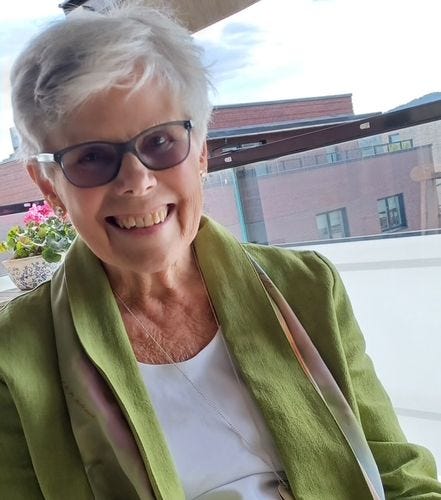
Originally from the United States but based in Norway since 1965, Marjorie Parker is a consultant and author specializing in creative leadership and organizational development. With an M.Sc. from the International Center for Studies in Creativity at SUNY Buffalo, she is credited with bridging American creative theory with the collaborative, egalitarian work culture of Scandinavia.
Her book Creating Futures that Matter Today: Facilitating Change through Shared Vision (2017), alongside her earlier work Creating Shared Vision: The Story of a Pioneering Approach to Organizational Revitalization, remains a valuable resource for leaders navigating organizational change.
Both works address questions that matter deeply to modern organizations: how employees can find greater meaning in their work, how to build stronger alignment and focus around a desired future, and how to shape environments that actively support creativity and innovation.