Research consistently shows that most strategies fail during implementation, not during design.
A widely cited global survey by Harvard Business Review and the Brightline Initiative found that only about 20% of strategic targets set by organizations are actually realized. The remaining 80% fail due to poor planning, limited resources, and weak execution.
In other words:
Organizations are often very good at designing strategies but far less capable of making them happen.
This is the classic “wise organization” problem.
Leaders and executives spend months crafting strategic plans, conducting market analyses, and producing impressive strategy decks.
But once the plan is announced, daily operations take over.
Projects drift.
Priorities change.
Initiatives lose momentum.
And the strategy quietly fades away.
The problem is rarely intelligence or insight.
The problem is translation: turning strategy into daily action.
The Execution Gap
Management researchers often describe this challenge as the execution gap.
Even the best strategies fail when organizations cannot align:
people
priorities
incentives
processes
decision-making
around the strategy.
Research published in Harvard Business Review suggests that organizations frequently underestimate how difficult execution actually is. Strategy is often treated as an analytical exercise, while execution is treated as an operational detail.
In reality, execution is the real strategy.
A brilliant plan that is never implemented has zero value.
A good plan that is consistently executed can transform an organization.
This is why leadership thinker Larry Bossidy, former CEO of Honeywell and co-author of the book Execution, famously said:
“Strategies most often fail because they aren’t executed well.”
Execution requires:
clarity of priorities
disciplined follow-through
aligned leadership behavior
feedback loops that allow learning and adjustment
Without these elements, strategy becomes aspiration rather than reality.
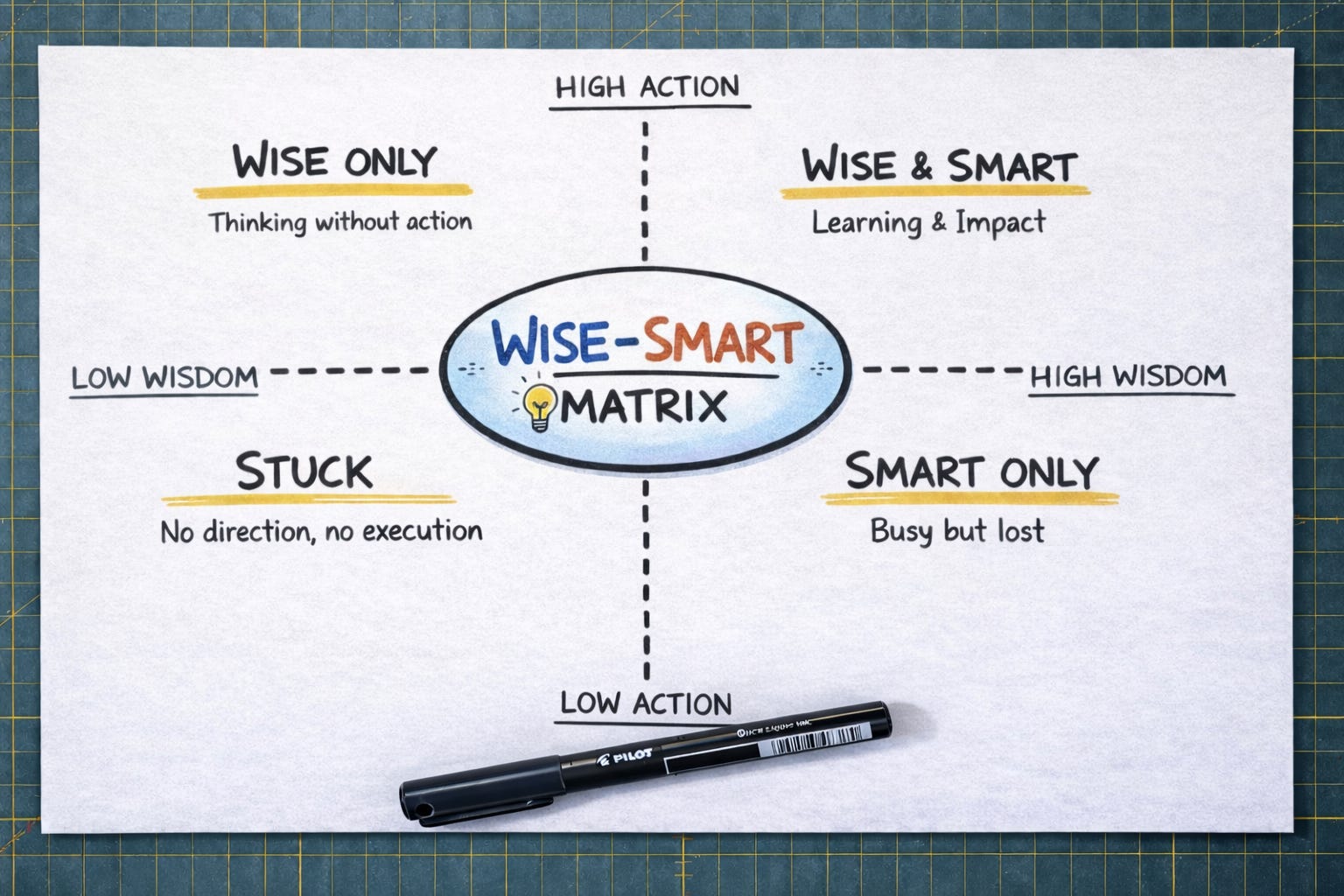
When Organizations Become “Busy but Lost”
At the other extreme, some organizations fall into the opposite trap.
They execute constantly.
Teams launch initiatives, projects, pilots, and experiments.
The organization becomes extremely active.
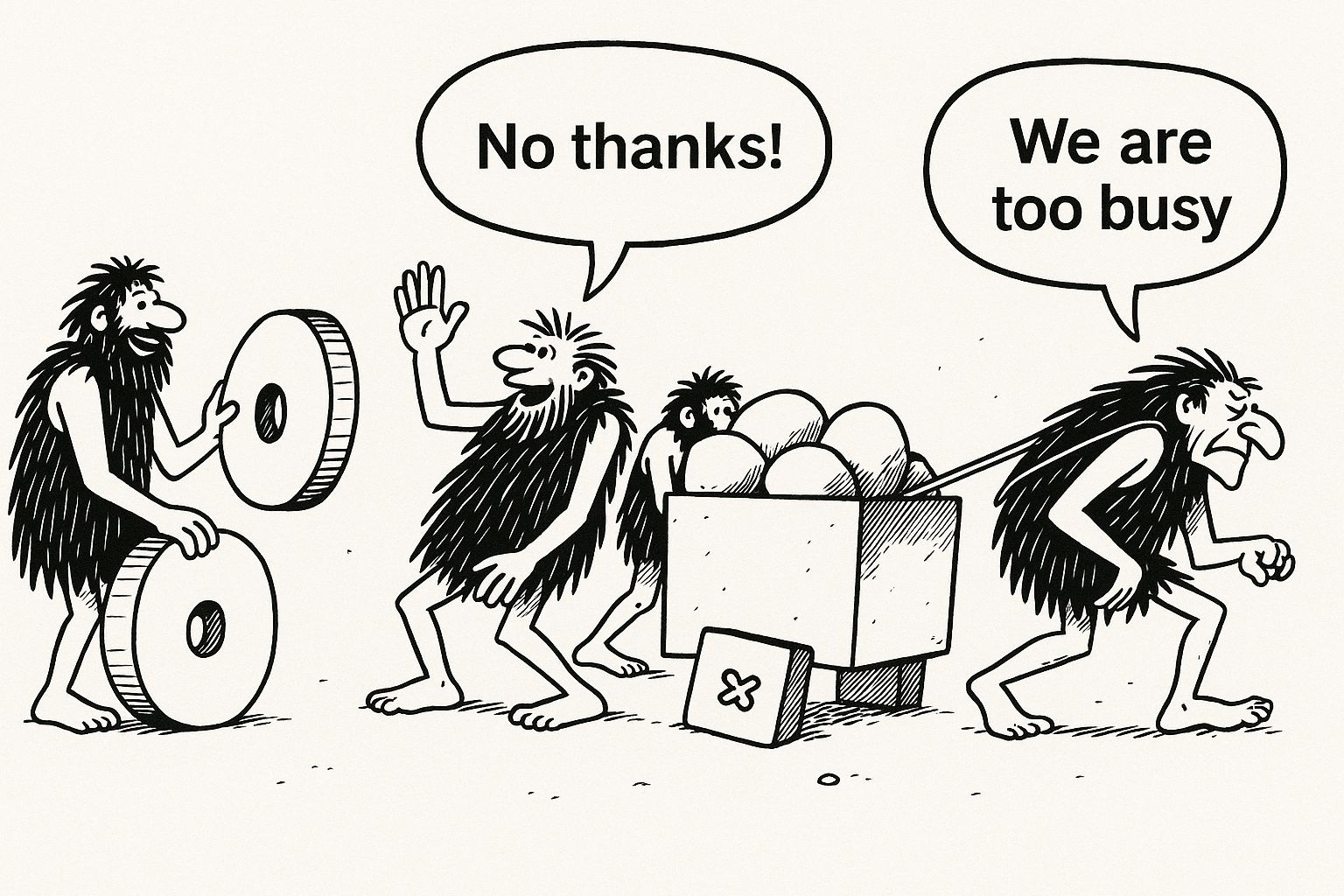
But without strategic alignment, activity can become noise.
Harvard Business School research has shown that organizations often suffer from initiative overload, where too many projects compete for attention and resources.
Employees become overwhelmed.
Leaders struggle to track progress.
And the organization ends up doing many things, but not necessarily the right things.
This is the “smart but not wise” organization.
They move fast.
But they do not always move in the right direction.
The Organizations That Win
The organizations that consistently succeed combine strategic clarity with disciplined execution.
They are both:
Wiser
They understand their environment
They learn continuously
They refine their strategy
Smarter
They execute consistently
They test ideas in practice
They learn through action
Strategy becomes a living system, not a static document.
Execution becomes learning in motion, not blind activity.
This is where the knowing–doing gap finally begins to close.
The 20 / 80 Balance: Becoming Wiser and Smarter
One way to understand this balance is through the Pareto principle.
A healthy organization might invest roughly:
20% of its energy in becoming wiser
strategic thinking
learning
reflection
sensing the environment
And 80% of its energy in becoming smarter
execution
experimentation
delivering value
learning through action
This balance ensures that organizations:
move with direction
act with purpose
adapt continuously
The Leadership Role: Bridging Thinking and Doing
Closing the knowing–doing gap is not just a process issue.
It is a leadership challenge.
Leaders must design organizations where:
insight turns into decisions
decisions turn into experiments
experiments generate learning
This requires leaders who:
value reflection
encourage action
tolerate intelligent failure
connect strategy with execution
In other words, leaders must cultivate organizations that are both wiser and smarter over time.
The Role of Facilitation in Strategy Execution
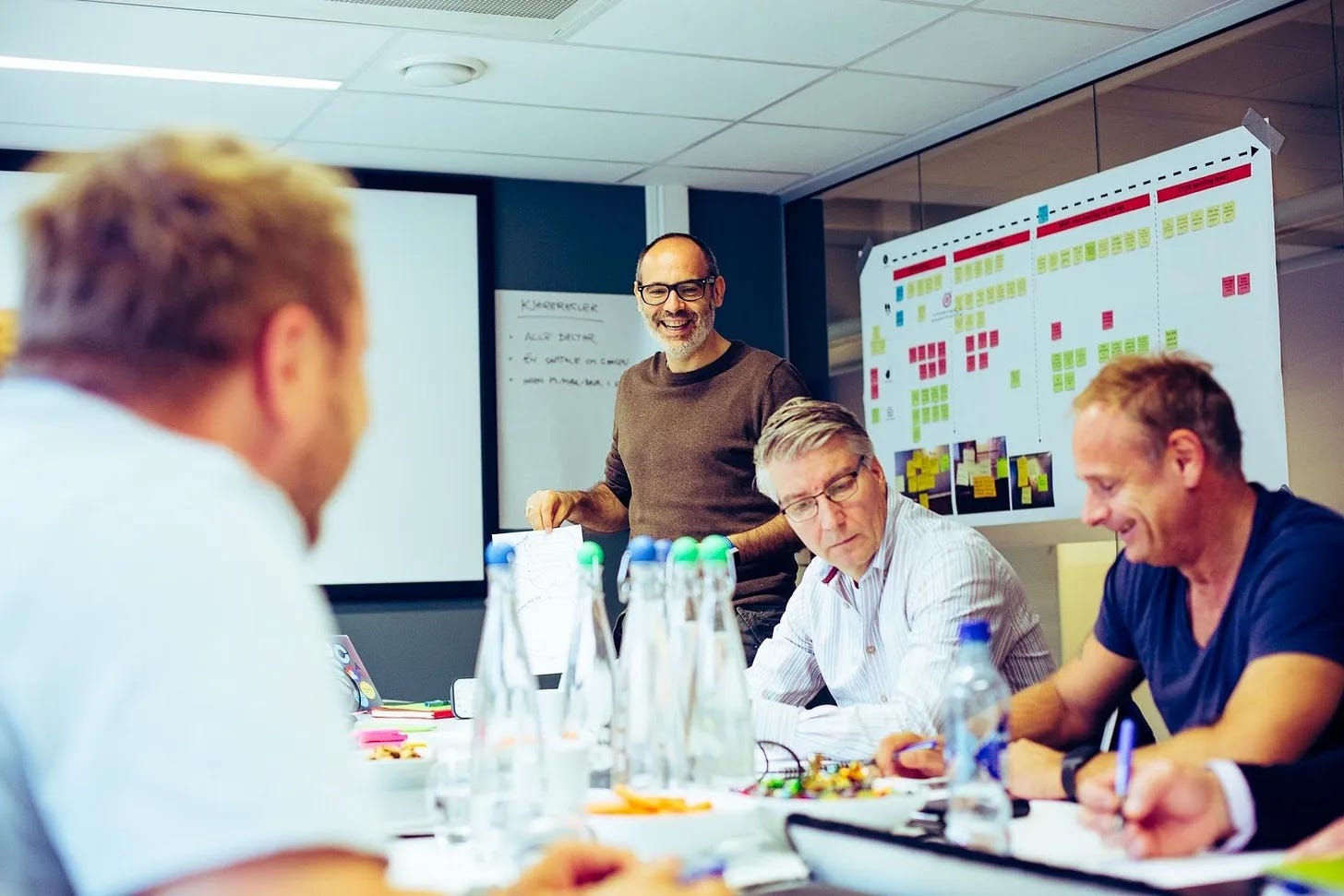
One of the most underestimated leadership capabilities in bridging this gap is facilitation.
Strategy often fails not because the idea is wrong, but because people were not involved in making sense of it together.
Facilitation helps organizations:
turn strategy into shared understanding
align teams around priorities
design actionable commitments
create feedback loops that sustain learning
Instead of strategy being something leaders announce, it becomes something teams co-create and continuously refine.
And that is where the real power lies.
Want Your Organization to Become Both Wiser and Smarter?
Many organizations already know what they should do.
But knowing is not enough.
The real challenge is turning insight into action, aligning teams around a clear direction, and creating the conditions where strategy actually becomes reality.
This is where facilitation and leadership development can make a powerful difference.
Through workshops, leadership sessions, and coaching, I help teams and organizations:
Turn strategy into shared understanding
Align teams around clear priorities
Design effective meetings and decision processes
Close the knowing–doing gap
Move from ideas to real impact
If this resonates with you and your organization, I would love to support you.
Reach out if you’d like help designing better conversations, stronger alignment, and smarter execution in your organization.
Because the organizations that succeed are not just smart.
They continuously become wiser and smarter.
I hope this post, made sense and you found it useful.
If “HELL YEAH!”, please like it and share it in social media so more people can get can also benefit from it :-)
I would also appreciate if you subscribe, and give some comments here if you wonder something and want to give me some feedback. I would love to read your input here!
If you have a Substack yourself and like my content, I would love for you to recommend “Facili-station” to your subscribers.
Have a nice one!!
Looking for a coach?
In service of those who serve others.
Leadership is hard. Whether you’re stepping into management, leading an entire organization or wondering about your career, the challenges are real: confusing, overwhelming, and sometimes isolating.
I offer a tailored 1:1 or team coaching quarterly program to help you move forward with clarity and confidence. I’ve walked in your shoes, and I’ll work with you to build the resilience and relational skills needed to lead well, beyond just the work.
If this sounds like what you need, let’s talk. Email me at jose@facilistation.com to book a no-strings attached, no-obligation call to talk about your needs and see what I can offer that will fit you the best. Because coaching isn’t expensive. Staying stuck is.
You should see the cost of a life and work that you don’t love... sometimes one good conversation can change your life and your career forever.

Looking for a facilitator and workshop designer?
If you need a workshop designer and facilitator to help you or your team to solve challenges, find solutions, make decisions, and to be more effective an perform better and faster, or a trainer to teach your team on how do this, please contact me at jose@facilistation.com
My workshops are designed to provide the structure required to quickly align and move forward with a plan or idea so you can reclaim time, energy and headspace.