


There was a time when leadership meant having the answers.
Clear direction. Decisive action. Strong opinions.
That time has passed.
Today’s leaders are navigating complexity, ambiguity, and constant change. Problems don’t arrive neatly packaged, and solutions rarely come from a single perspective. In this landscape, leadership is less about control and more about creating the conditions where people can think well together.
That’s where facilitation quietly steps in.
From “Leading the Way” to “Holding the Space”
Facilitation isn’t about standing back or being neutral.
It’s about being intentionally present.
A facilitative leader knows how to:
Slow the conversation down when clarity is missing
Surface what’s not being said — without forcing it
Invite multiple perspectives without losing direction
Guide a group through uncertainty rather than around it
This kind of leadership doesn’t demand attention. It earns trust.
Why Facilitation Is a Human Skill. Not a Soft One
Facilitation is often misunderstood as a “nice-to-have” capability. Something useful in workshops, but secondary in real decision-making.
In reality, it’s one of the most strategic skills a leader can develop.
Why?
Because facilitation is about:
How decisions are made, not just what decisions are made
How people feel in the process, not just the outcome
How ownership is created, not just alignment
When people are involved in shaping the path forward, commitment follows naturally. Not because they were convinced but because they were included.
The Invisible Power of Psychological Safety
Great facilitation creates something subtle but powerful: psychological safety.
Not by setting rules or naming values, but by:
Asking better questions than giving better answers
Making room for uncertainty without rushing to closure
Treating disagreement as information, not resistance
When people feel safe, they don’t just participate, they think. And thinking together is where real progress begins.
Practical Impacts of Facilitative Leadership
When leaders adopt a facilitative mindset, organisations benefit in multiple ways:
Better decision-making because diverse viewpoints are surfaced and integrated.
Stronger engagement because people contribute from their strengths.
Greater innovation because psychological safety encourages risk-taking and creative thinking.
More resilient collaboration because teams can navigate conflict and uncertainty together.
Facilitation isn’t about relinquishing leadership. It’s about elevating it — from being the person who decides to being the person who enables the team to decide well together.
Shifting Mindsets: From “Leader as Expert” to “Leader as Enabler”
If you want to broaden your leadership impact today, one of the most effective shifts is this: see your role not as offering all the answers but as creating space for collective insight.
That doesn’t mean being passive or neutral about outcomes, it means being intentional about process: designing conversations, guiding thinking, and harnessing human energy toward shared goals. The facilitative leader doesn’t just lead work, they lead the way people work together.
Facilitation in an Age of AI
As AI takes over more analytical and operational tasks, the uniquely human aspects of leadership become even more valuable.
Facilitation lives right there:
Reading the room
Sensing energy shifts
Navigating emotions and meaning
Helping groups find clarity without being told what to think
These are not tasks that can be automated. They require presence, judgment, and a calm state of mind.
The Shift That Changes Everything
The most powerful mindset shift for modern leaders is this:
My role is not to provide the answer, but to design the conversation where the best answer can emerge.
That’s facilitation.
Not as a technique.
Not as a workshop format.
But as a way of showing up.
And once you see leadership through that lens, everything changes — including how people experience working with you.
I hope this post, made sense and you found it useful.
If “HELL YEAH!”, please like it and share it in social media so more people can get can also benefit from it :-)
I would also appreciate if you subscribe, and give some comments here if you wonder something and want to give me some feedback. I would love to read your input here!
If you have a Substack yourself and like my content, I would love for you to recommend “Facili-station” to your subscribers.
Have a nice one!!
Looking for a coach?
In service of those who serve others.
Leadership is hard. Whether you’re stepping into management, leading an entire organization or wondering about your career, the challenges are real: confusing, overwhelming, and sometimes isolating.
I offer a tailored 1:1 or team coaching quarterly program to help you move forward with clarity and confidence. I’ve walked in your shoes, and I’ll work with you to build the resilience and relational skills needed to lead well, beyond just the work.
If this sounds like what you need, let’s talk. Email me at jose@facilistation.com to book a no-strings attached, no-obligation call to talk about your needs and see what I can offer that will fit you the best. Because coaching isn’t expensive. Staying stuck is.
You should see the cost of a life and work that you don’t love... sometimes one good conversation can change your life and your career forever.

Looking for a facilitator and workshop designer?
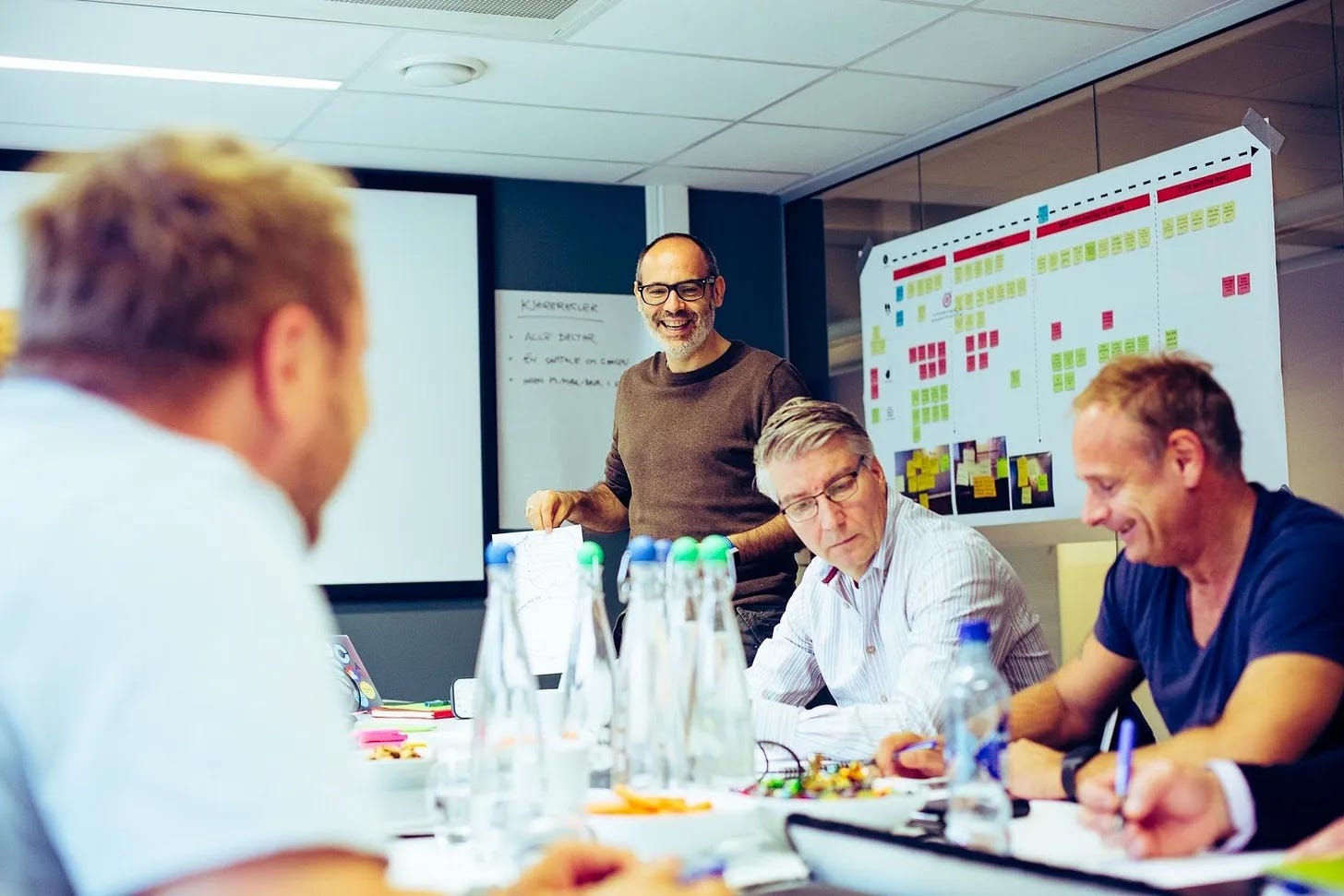
If you need a workshop designer and facilitator to help you or your team to solve challenges, find solutions, make decisions, and to be more effective an perform better and faster, or a trainer to teach your team on how do this, please contact me at jose@facilistation.com
My workshops are designed to provide the structure required to quickly align and move forward with a plan or idea so you can reclaim time, energy and headspace.
Awesome post!
I work as a facilitator and I really agree with your post. You explain it very clear.