I went back to a children’s story this week. Not for my kids. For me.
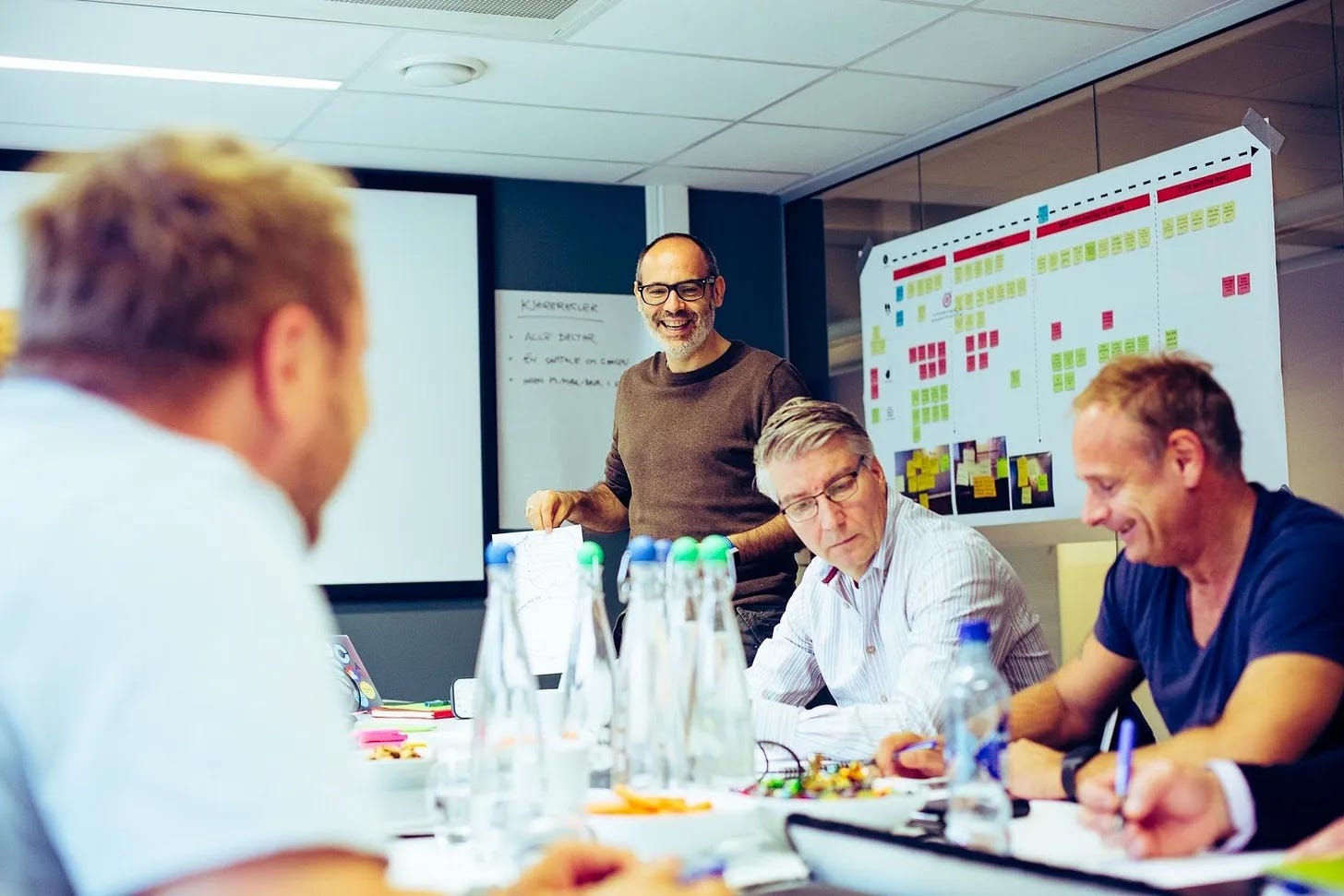
I had just come out of a meeting where five smart people spent an hour agreeing with each other without noticing they were talking about five different things. Everyone left a bit tired and a bit annoyed. Nobody was wrong. That was the problem.
On the tram home I remembered the old parable of the blind men and the elephant. I hadn’t read it since I was small, so I looked it up that evening. It is shorter than I remembered. And a lot less gentle.
The story, in case you’ve forgotten it too
Six blind men sit by a road every day. One morning an elephant comes past, and they ask the driver to stop so they can find out what an elephant actually is.
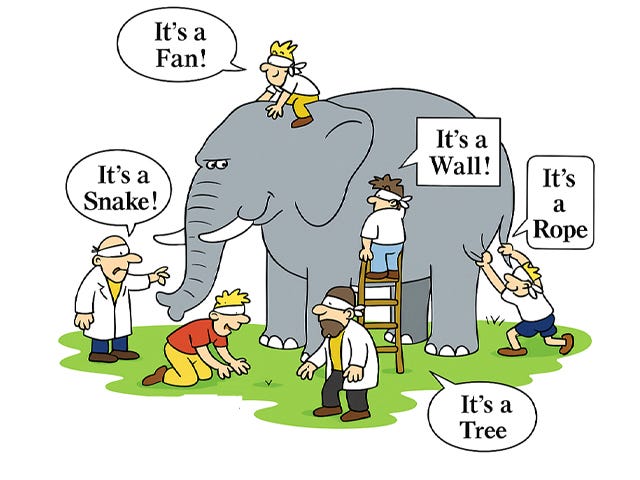
One touches the side and says it’s a wall. One gets the tusk: a spear. The trunk is a snake. The leg is a tree. The ear is a fan. The last one, who takes a while to even find the animal, grabs the tail and announces, with total confidence, that it is obviously a rope.
Then the elephant walks off. And the six of them sit by the road for the rest of the day arguing, calling each other names, each completely sure he is the one who knows.
The version I read, by James Baldwin, the 19th-century American educator, ends with one dry line: people who have eyes sometimes act just as foolishly.
I laughed. Then I stopped laughing, because I recognised the meeting I had just left.
I see this elephant every week
I work as a service designer in the City of Oslo, mostly on services for children and families. Put a group of us in a room to talk about “the service” and watch what happens.
The caseworker is holding the leg. It’s heavy, it’s slow, it’s the thing she has to carry every day. The developer has the trunk, flexible and full of possibilities. The manager has the side: big, solid, a budget line. And the parent who actually uses the service? Often not in the room at all. Or holding the tail, wondering why nobody explained anything.
None of them are lying. Each description is accurate. It’s just partial.
After twenty-something years of facilitating, I’m convinced most workshop conflict isn’t about values or egos. It’s about touch points. People report, honestly, what their hands are telling them, and then defend it like it’s the whole animal.
The bit of the story that stings me is the ending. The elephant leaves. The men don’t follow it, they don’t swap places, they don’t compare notes. They argue about an animal that isn’t there anymore. I have been in that meeting. I have, if I’m honest, run that meeting.
What I try to do instead
I don’t have a method with a fancy name for this. Just a few habits I keep coming back to.
I ask “where are you standing?” before “what do you think?” When someone says the elephant is a rope, the interesting question isn’t whether they’re right. It’s which part they’re holding, and for how long they’ve been holding it.
I make people describe before they conclude. “It’s rough, it’s flat, it doesn’t move” is information I can use. “It’s a wall” is already a verdict, and verdicts start fights.
I put the pieces on the wall, literally. Sticky notes, a big sketch, whatever. Once the trunk and the tail and the ear are next to each other on paper, the group can start to see an animal. You can’t do that in a conversation that lives only in people’s heads.
I try to keep the elephant in the room. That usually means the user. A quote, a recording, a journey map, a real person if we can manage it. Without it we’re just six people arguing about a memory.
And I swap hands. Ask the developer to explain the caseworker’s day. Ask the manager what the parent would say. It’s a bit awkward. It works far better than another round of opinions.
One more thing
The story usually gets told as a lesson about humility. Fair enough. But I read it differently now.
Six people, each with a true piece of the picture. Put together, they had everything they needed to describe an elephant pretty well. What they were missing wasn’t knowledge. It was someone to slow them down, get them to listen, and lay the pieces side by side.
That’s the job, isn’t it? Not to know what the elephant looks like. Just to help a group find out together, before it walks away.
So I’m curious: which part are you holding right now? And who in your team has their hands on a part you’ve never touched?
Hit reply and tell me. I read every one.
Jose
I hope this post, made sense and you found it useful.
If “HELL YEAH!”, please like it and share it in social media so more people can get can also benefit from it :-)
I would also appreciate if you subscribe, and give some comments here if you wonder something and want to give me some feedback. I would love to read your input here!
If you have a Substack yourself and like my content, I would love for you to recommend “Facili-station” to your subscribers.
Have a nice one!!
Looking for a coach?
In service of those who serve others.
Leadership is hard. Whether you’re stepping into management, leading an entire organization or wondering about your career, the challenges are real: confusing, overwhelming, and sometimes isolating.
I offer a tailored 1:1 or team coaching quarterly program to help you move forward with clarity and confidence. I’ve walked in your shoes, and I’ll work with you to build the resilience and relational skills needed to lead well, beyond just the work.
If this sounds like what you need, let’s talk. Email me at jose@facilistation.com to book a no-strings attached, no-obligation call to talk about your needs and see what I can offer that will fit you the best. Because coaching isn’t expensive. Staying stuck is.
You should see the cost of a life and work that you don’t love... sometimes one good conversation can change your life and your career forever.

Looking for a facilitator and workshop designer?
If you need a workshop designer and facilitator to help you or your team to solve challenges, find solutions, make decisions, and to be more effective an perform better and faster, or a trainer to teach your team on how do this, please contact me at jose@facilistation.com
My workshops are designed to provide the structure required to quickly align and move forward with a plan or idea so you can reclaim time, energy and headspace.