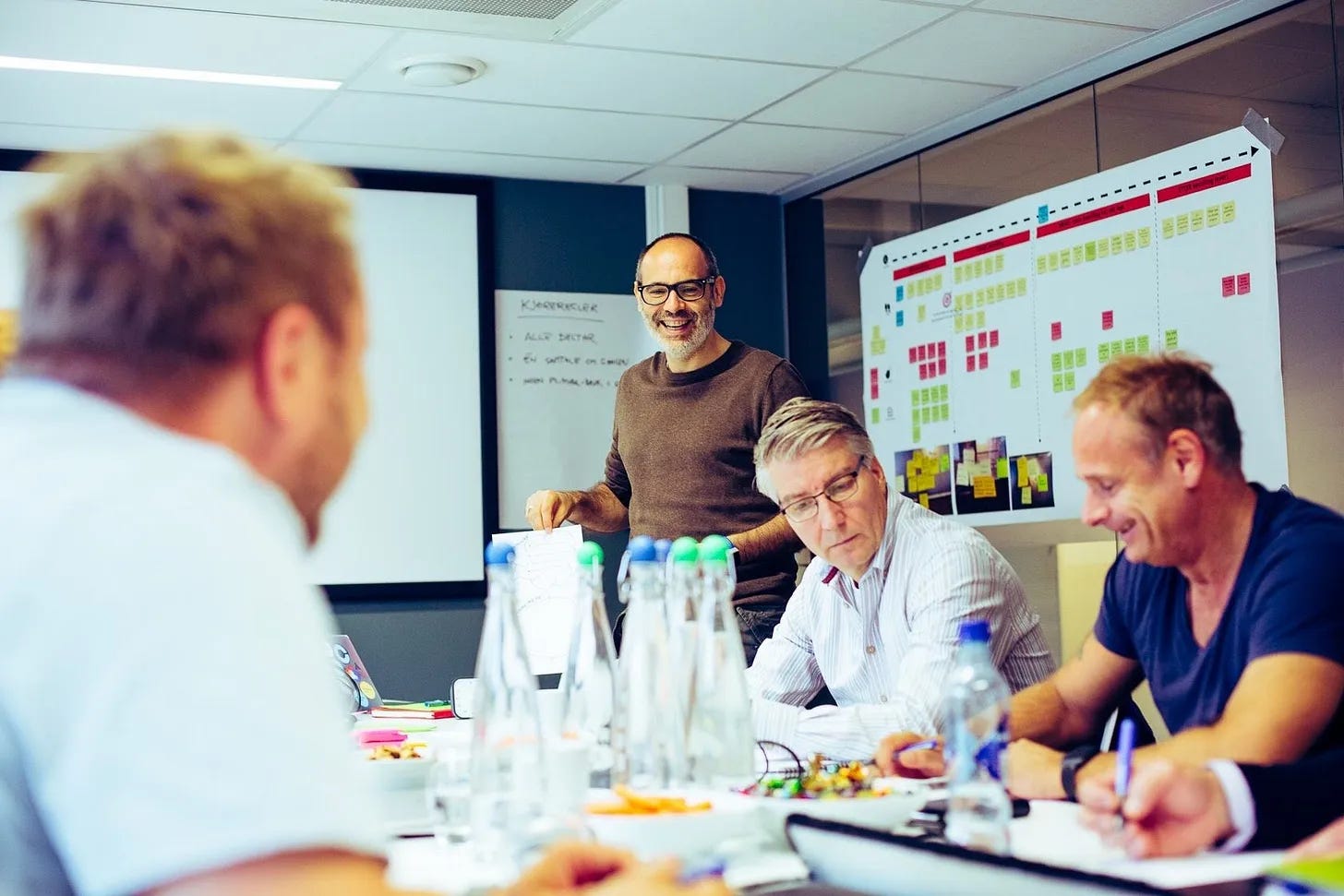
You’ve just finished a workshop. The room is emptying, laptops are closing, and someone stops at the door: “Thank you, that was really useful.”
And what comes out of your mouth? Probably “You’re welcome.” Or “No problem.” Or a small shrug and a smile while you’re already reaching for the next sticky note.
We hear “thank you” many times a week at work. In meetings, in Slack threads, after a favour, after a hard conversation. Yet most of us answer on autopilot. I think that’s a missed opportunity, and this post is about what to do instead.
Why we brush thanks away at work
At work, we have a whole vocabulary for making appreciation disappear: “No problem.” “It was nothing.” “Just doing my job.” “Oh, it was mostly the team.”
These replies feel modest and professional. Many of us learned that taking credit is a bit embarrassing, especially in cultures that value humility. There’s also speed: the meeting is over, the next one starts in three minutes, and lingering on a compliment feels like a luxury.
But look at what these phrases actually say. “No problem” tells the person that what they noticed didn’t really cost you anything. “It was nothing” tells them their appreciation was misplaced. Without meaning to, we hand their gift back unopened.
A thank you is an offering
When a colleague thanks you, they are doing something small but real. They noticed your effort. They paused their own busy day to say it out loud. Sometimes it took a little courage.
In that moment, they are not asking you to be humble. They are offering connection. The kindest thing you can do is accept it, let it land, and show them it mattered.
This matters more than it seems. Workplaces where appreciation is received, not just given, feel safer. People keep noticing each other’s work when their noticing is welcomed. When it gets brushed off, they quietly stop.
What to say instead
The trick is simple: pause for a second, look at the person, and say something true. Here are some replies that work well at work.
“I’m really glad it helped.” This puts the focus on their outcome, not your effort. Great after you’ve helped someone solve a problem.
“Thank you for saying that. It means a lot.” You thank them for the thanks. It honours the fact that they took the time.
“I really enjoyed working on this with you.” Perfect when the work was shared. It returns the appreciation without deflecting it.
“That’s good to hear. I wasn’t sure how it landed.” Honest and human, especially after a presentation or a tough meeting.
“It was a pleasure.” Only when it truly was. Then it’s lovely.
And yes, a plain “You’re welcome” is fine too. Said slowly, with a smile and eye contact, it lands far better than a perfect phrase rushed out on the way to the next meeting.
One more thing: if the team really did most of the work, don’t hide behind them. Say “Thank you, I’ll pass that on to the team too.” You accept the thanks and share it. Both things can be true.
For leaders and facilitators
If you lead a team or run sessions, people watch how you handle appreciation. When a leader waves away every thank you, the team learns that recognition is awkward. When a leader receives it warmly, the team learns that noticing each other is normal.
As a facilitator, I see this at the end of almost every workshop. The closing round, where people share what they’re grateful for, is often the most human part of the day. But it only works if the people being thanked actually take it in.
You can model this in small ways. Receive thanks fully, in front of others. When you thank someone, be specific about what they did and what difference it made. And give people a moment to respond, instead of rushing to the next agenda point.
A small practice for this week
Next time someone thanks you at work, try this:
Stop what you’re doing for one breath.
Look at them.
Say one true sentence about what their thanks means to you, or what you’re glad about.
That’s it. It takes three seconds. Notice how the other person reacts, and notice how it feels to let appreciation in instead of batting it away.
We spend a lot of energy at work trying to build trust, belonging and good collaboration. Sometimes it starts with something as small as how we answer two words: thank you.
I hope this post, made sense and you found it useful.
If “HELL YEAH!”, please like it and share it in social media so more people can get can also benefit from it :-)
I would also appreciate if you subscribe, and give some comments here if you wonder something and want to give me some feedback. I would love to read your input here!
If you have a Substack yourself and like my content, I would love for you to recommend “Facili-station” to your subscribers.
Have a nice one!!
Looking for a coach?
In service of those who serve others.
Leadership is hard. Whether you’re stepping into management, leading an entire organization or wondering about your career, the challenges are real: confusing, overwhelming, and sometimes isolating.
I offer a tailored 1:1 or team coaching quarterly program to help you move forward with clarity and confidence. I’ve walked in your shoes, and I’ll work with you to build the resilience and relational skills needed to lead well, beyond just the work.
If this sounds like what you need, let’s talk. Email me at jose@facilistation.com to book a no-strings attached, no-obligation call to talk about your needs and see what I can offer that will fit you the best. Because coaching isn’t expensive. Staying stuck is.
You should see the cost of a life and work that you don’t love... sometimes one good conversation can change your life and your career forever.

Looking for a facilitator and workshop designer?
If you need a workshop designer and facilitator to help you or your team to solve challenges, find solutions, make decisions, and to be more effective an perform better and faster, or a trainer to teach your team on how do this, please contact me at jose@facilistation.com
My workshops are designed to provide the structure required to quickly align and move forward with a plan or idea so you can reclaim time, energy and headspace.