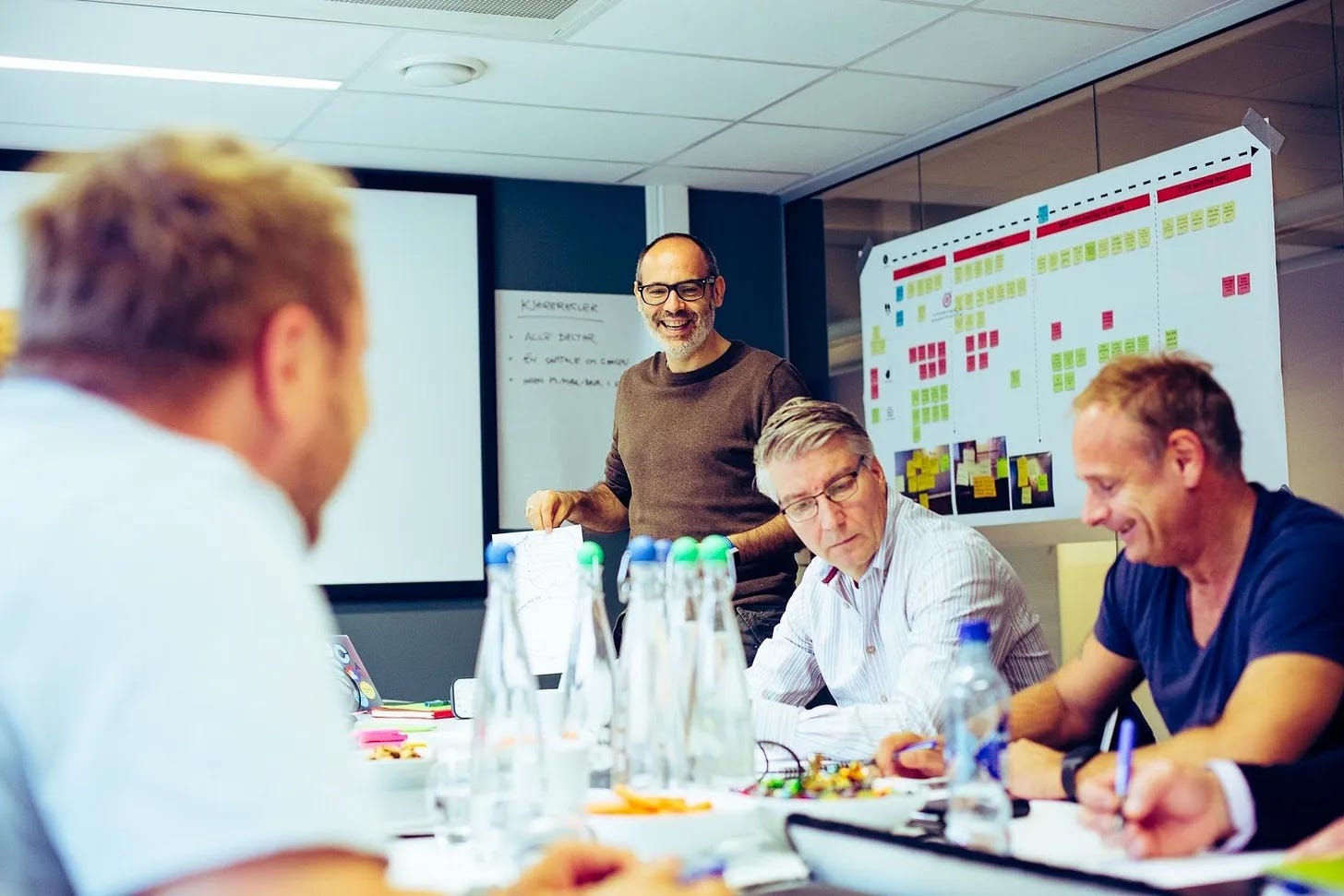
In hundreds of workshops I’ve facilitated over the years—across municipalities, corporations, and innovation labs—I’ve tested dozens of icebreakers.
Most of them are… fine.
Some are entertaining.
But one stands above the rest in terms of depth, connection, and immediate impact on group dynamics.
It’s simple:
Ask participants to share:
Something they are really proud of in their personal life and why
A fun fact about themselves that most people in the room probably don’t know
That’s it.
No complicated instructions.
No props.
No forced creativity.
Yet the effect on the group is extraordinary.
Why This Icebreaker Works So Well
1. It Humanizes the Room Immediately
In most workshops, people enter the room wearing their professional armor:
Job titles
Expertise
Organizational roles
Power dynamics
When someone shares something they are proud of in their personal life, something shifts.
People suddenly see:
The parent
The musician
The marathon runner
The person who overcame a challenge
The volunteer
The hobbyist
The room stops being a collection of job titles and becomes a group of humans.
That shift is foundational for good collaboration.
2. Pride Creates Positive Energy
The prompt focuses on something they are proud of.
This matters.
Pride triggers:
Positive emotions
Confidence
Energy
Authentic storytelling
Instead of awkward introductions, participants share moments that matter to them.
And when people talk about things that matter to them, the room naturally becomes more attentive and engaged.
You can literally feel the energy change.
3. The “Why” Creates Meaning
The most important part of the exercise is actually the “why.”
Not just:
“I ran a marathon.”
But:
“I ran a marathon after recovering from a serious injury, and finishing it reminded me that I’m stronger than I thought.”
That context creates emotional resonance.
People start to listen differently.
4. The Fun Fact Adds Playfulness
The second part of the icebreaker introduces lightness and surprise.
Examples I’ve heard in workshops:
Someone was once a professional magician
Someone can solve a Rubik’s cube in under a minute
Someone used to work on a fishing boat in Alaska
Someone has climbed Kilimanjaro
Someone can imitate 20 different accents
Suddenly the group learns things they would never discover in normal meetings.
It creates curiosity and laughter.
And laughter is a powerful accelerator for group trust.
What Happens Next in the Workshop
After this icebreaker, something remarkable happens.
The group dynamics change in three important ways.
1. Psychological Safety Increases
When people reveal a small part of themselves, they unconsciously signal:
“It’s safe to be human here.”
This makes participants more willing to:
Speak up
Share ideas
Ask questions
Challenge assumptions
Which is exactly what you need in a productive workshop.
2. People Listen More Deeply
Once participants have heard personal stories from each other, they stop seeing each other as strangers.
Instead they think:
“Oh, that’s the person who ran the marathon.”
“That’s the one who builds guitars.”
“That’s the person who lived in five countries.”
People begin to listen with curiosity rather than judgment.
3. Collaboration Becomes Easier
Trust and connection are the invisible infrastructure of collaboration.
Without them, workshops feel stiff and transactional.
With them, conversations become:
More open
More creative
More honest
And that’s when the real work can begin.
Why This Icebreaker Works Better Than Most
Many icebreakers fail because they are either:
Too superficial
“Say your name and favorite color.”
or
Too uncomfortable
“Share your biggest failure.”
This one sits in the perfect middle.
It is:
Personal but safe
Positive but meaningful
Playful but authentic
It invites people to show a piece of themselves without forcing vulnerability.
That balance is why it works so consistently.
How to Facilitate It
A few practical tips.
1. Go first
Model the tone by sharing your own example.
Facilitators who go first set the psychological safety for the group.
2. Keep it short
Ask participants to limit themselves to 1–2 minutes each.
This keeps the energy high.
3. Listen actively
Encourage the group to listen without interruptions.
This signals that stories matter.
4. Capture interesting facts
Sometimes I write fun facts on a flipchart.
They often become references during the workshop:
“Let’s hear from the marathon runner.”
“What does the magician think?”
It keeps the human connection alive.
The Hidden Outcome
By the end of this exercise, something subtle but powerful has happened:
The room has moved from:
A group of professionals
to
A group of humans working together.
And that shift makes everything that follows easier.
Ideas flow more freely.
Disagreements become constructive.
And collaboration becomes natural.
For a facilitator, that’s pure gold.
I hope this post, made sense and you found it useful.
If “HELL YEAH!”, please like it and share it in social media so more people can get can also benefit from it :-)
I would also appreciate if you subscribe, and give some comments here if you wonder something and want to give me some feedback. I would love to read your input here!
If you have a Substack yourself and like my content, I would love for you to recommend “Facili-station” to your subscribers.
Have a nice one!!
Looking for a facilitator and workshop designer?
If you need a workshop designer and facilitator to help you or your team to solve challenges, find solutions, make decisions, and to be more effective an perform better and faster, or a trainer to teach your team on how do this, please contact me at jose@facilistation.com
My workshops are designed to provide the structure required to quickly align and move forward with a plan or idea so you can reclaim time, energy and headspace.