

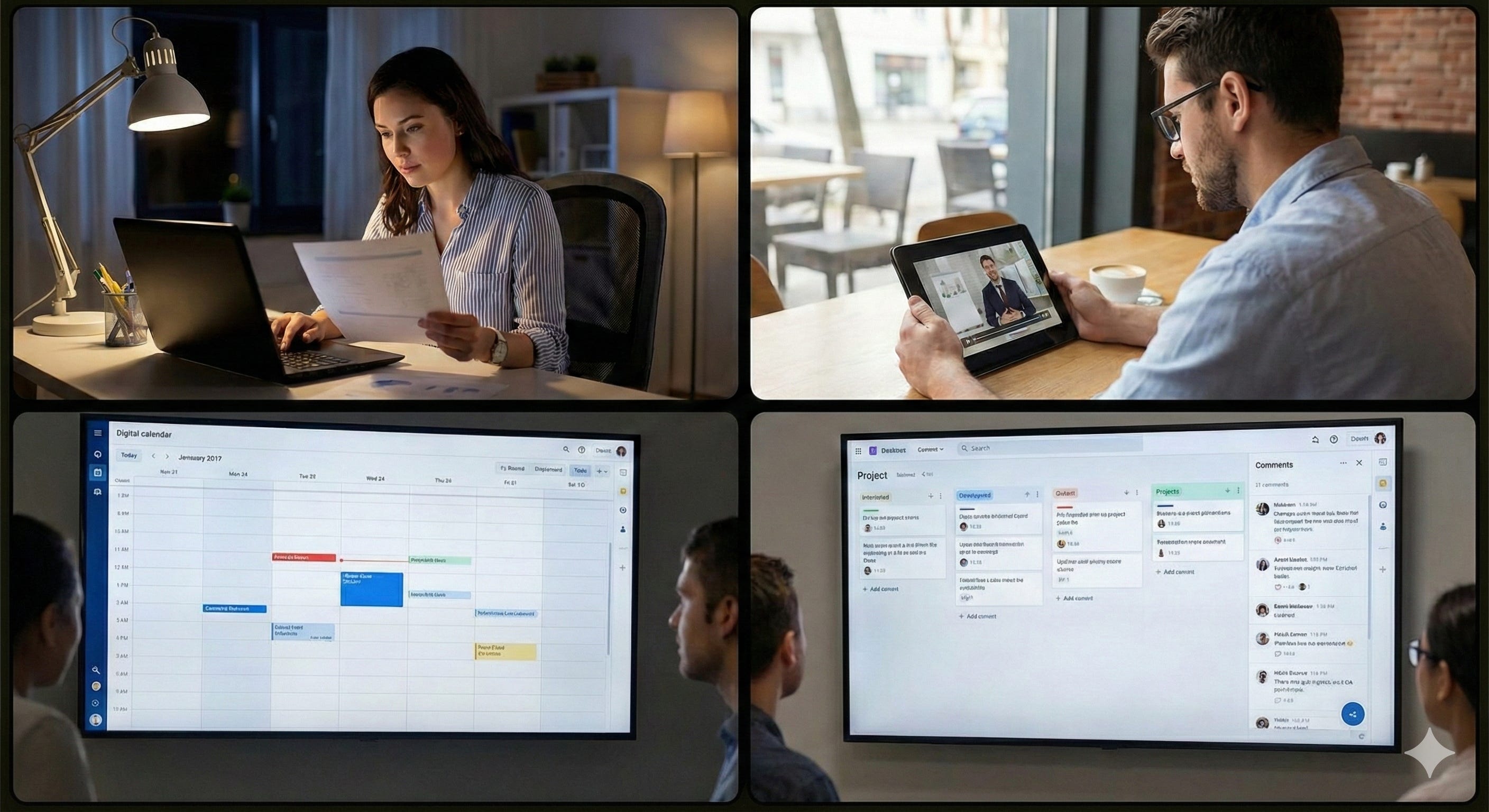
The Power of Asynchronous Facilitation
We often associate facilitation with energy, post-its, and people in a room—or at least in a Zoom call. But collaboration doesn’t always need to happen in real time.
Asynchronous facilitation—the art of guiding collaboration that happens across time and place—opens the door to inclusion, reflection, and flexibility. It allows participants to engage when it suits them, giving everyone the chance to contribute thoughtfully, not just the loudest or quickest voices in the room.
Why Asynchronous Collaboration Matters
Distributed and hybrid teams are now the norm. Time zones, busy calendars, and screen fatigue make it unrealistic to always gather everyone at once. But beyond logistics, asynchronous work offers something even more valuable: depth.
When people can pause, reflect, and respond on their own time, their input becomes more intentional and diverse. Introverts get more space. Language barriers shrink. Participation grows. And facilitators get richer data to design more meaningful live interactions.
Meetings are excellent for alignment.
They are far less effective for insight.
Most breakthrough ideas don’t arrive on demand, on mute, or between agenda points.
They emerge later—on a walk, in silence, in the shower, on the commute home—when the pressure to perform thinking disappears.
Asynchronous facilitation works because it respects how insight actually happens.
It creates pause, and pause is not a productivity failure—it’s a cognitive requirement.
Insight Lives Between the Sessions
Insight doesn’t live in calendars.
It lives in liminal spaces—the in-between moments where the mind is allowed to wander without being directed.
Your brain needs:
Boredom
White space
Low stimulation
Time without inputs
When every gap is filled with meetings, notifications, and expectations, there is no room for synthesis—only reaction.
Asynchronous facilitation intentionally designs for these gaps.
Not by adding more tasks, but by removing urgency and giving people permission to think on their own terms.
Meetings create alignment.
Silence creates insight.
Techniques for Effective Asynchronous Facilitation
1. Pre-Session Exploration
Use asynchronous tools to collect insights before a live session:
Surveys and Forms (Typeform, Google Forms, Mentimeter): Gather perspectives, needs, or pain points.
Shared Canvases (Miro, Mural, FigJam): Let participants brainstorm or vote asynchronously on themes.
Storytelling Walls: Ask participants to share short stories or examples that illustrate key challenges.
💡 Facilitator Tip: Frame these activities as “warming up the collective mind.” People will arrive at the live session more engaged and already invested.
2. Between-Session Reflection
Between sessions is where the real work often happens—not because people are doing more, but because they are finally doing less.
Reflection needs time, not facilitation pressure.
Asynchronous methods create space for ideas to surface naturally, without the performance layer that often shows up in live sessions.
Comment Boards or Threads (Notion, Teams, Slack): Ask reflection questions or invite feedback on early ideas.
Shared Journals or Padlets: Encourage participants to post insights, sketches, or thoughts as they emerge.
Mini Challenges: Set small reflective tasks that connect theory to practice.
💡 Facilitator Tip: Keep engagement light and flexible. It’s not homework—it’s an invitation to think.
3. Post-Session Continuity
Facilitation doesn’t end when the meeting does. Continue collaboration asynchronously:
Shared Summaries: Post key takeaways and let people comment or add reflections.
Idea Boards: Let participants vote or expand on ideas that emerged during the session.
Feedback Loops: Use asynchronous channels for follow-up input on prototypes or decisions.
💡 Facilitator Tip: Create a clear “collaboration rhythm.” Asynchronous facilitation works best when participants know when and how they’re expected to engage.
The Right Tools for Asynchronous Facilitation
Here are a few that blend structure with creativity:
Miro / Mural / FigJam – for collaborative canvases
Notion / Confluence – for structured documentation and discussions
Slack / Teams Channels – for comment threads and reflections
Google Docs / Forms – for collective writing and quick data gathering
Loom / VideoAsk – for asynchronous video sharing and storytelling
Choose tools that feel natural for your team, not just trendy. The goal is to reduce friction, not add more platforms.
Shifting the Facilitator Mindset
Asynchronous facilitation requires us to move from orchestrating a moment to designing a journey.
You’re not managing a room—you’re curating an ongoing space for thinking, sharing, and evolving ideas.
The key ingredients?
Clarity – clear instructions and expectations
Timing – defined windows for contribution
Empathy – respecting people’s pace and context
When done well, asynchronous facilitation doesn’t replace live collaboration—it enriches it.
As facilitators, our role is not to extract ideas on demand, but to design conditions where thinking can happen safely and slowly.
Sometimes the most powerful intervention is not another canvas or breakout room—but permission to pause.
No agenda.
No productivity KPI.
No immediate outcome.
That’s not wasted time.
That’s where the insight is formed.
Final Reflection
Facilitation is ultimately about connection and meaning-making. Asynchronous methods remind us that connection doesn’t need to be simultaneous. Sometimes, the best conversations happen between the sessions—when people have had time to think, breathe, and bring their best ideas forward.
I hope this post, made sense and you found it useful.
If “HELL YEAH!”, please like it and share it in social media so more people can get can also benefit from it :-)
I would also appreciate if you subscribe, and give some comments here if you wonder something and want to give me some feedback. I would love to read your input here!
If you have a Substack yourself and like my content, I would love for you to recommend “Facili-station” to your subscribers.
Have a nice one!!
Looking for a coach?
In service of those who serve others.
Leadership is hard. Whether you’re stepping into management, leading an entire organization or wondering about your career, the challenges are real: confusing, overwhelming, and sometimes isolating.
I offer a tailored 1:1 or team coaching quarterly program to help you move forward with clarity and confidence. I’ve walked in your shoes, and I’ll work with you to build the resilience and relational skills needed to lead well, beyond just the work.
If this sounds like what you need, let’s talk. Email me at jose@facilistation.com to book a no-strings attached, no-obligation call to talk about your needs and see what I can offer that will fit you the best. Because coaching isn’t expensive. Staying stuck is.
You should see the cost of a life and work that you don’t love... sometimes one good conversation can change your life and your career forever.

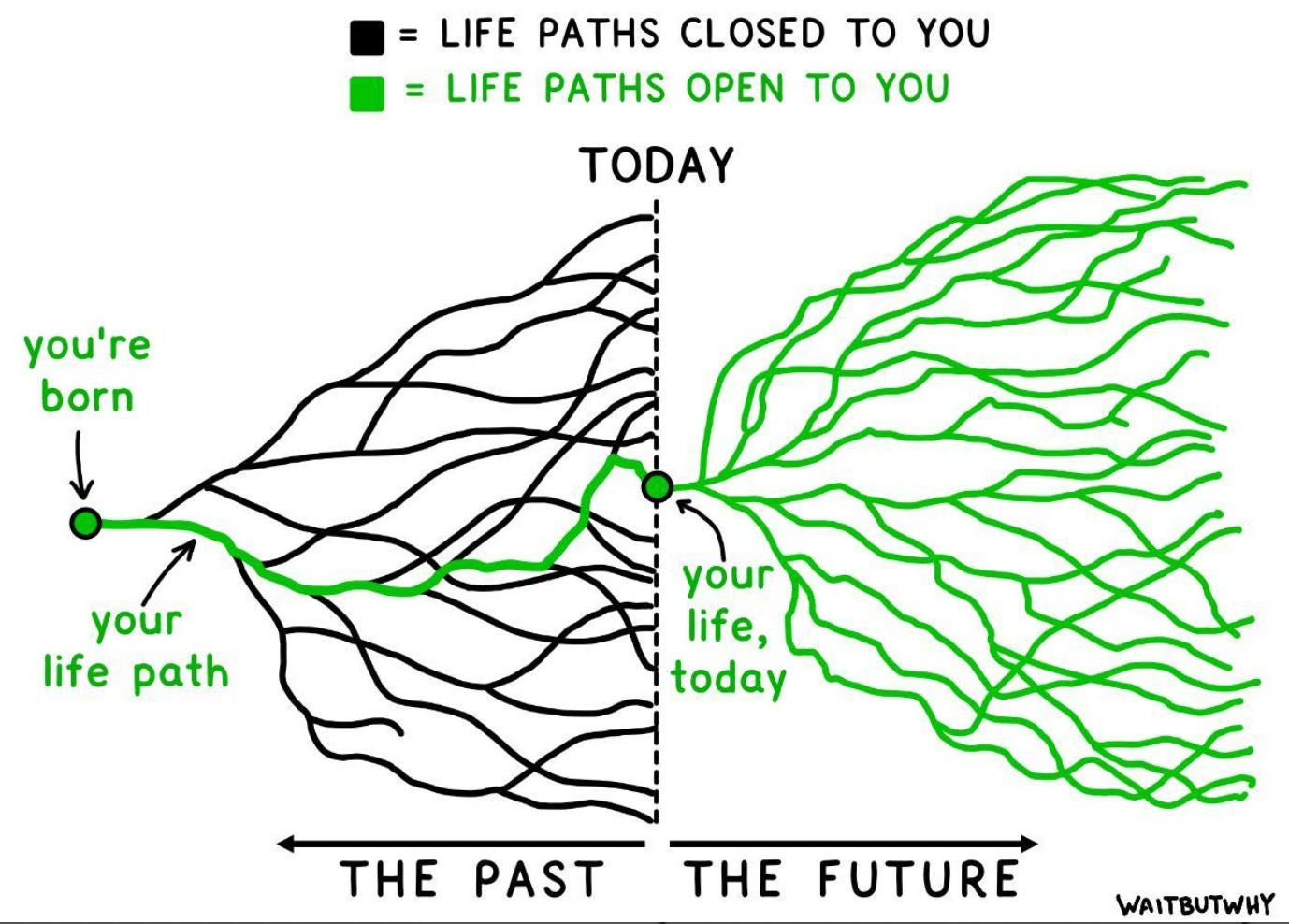
Looking for a facilitator and workshop designer?
If you need a workshop designer and facilitator to help you or your team to solve challenges, find solutions, make decisions, and to be more effective an perform better and faster, or a trainer to teach your team on how do this, please contact me at jose@facilistation.com
My workshops are designed to provide the structure required to quickly align and move forward with a plan or idea so you can reclaim time, energy and headspace.
This is a tactic I have long used in my work, including in training. This is a great way to think about learning and getting the most for each participant. Thank you!