

I knew it was going to fail before we even started.
Not because of the workshop, but because of everything around it.
I was asked to design and facilitate a one-day workshop.
Map a user journey.
Identify pain points.
Find opportunities for improvement, efficiency, digitalization.
On paper, it looked like a standard service design task.
But something felt off.
Not in the brief.
In the questions that were not being answered.
What is this actually going to be used for?
Who is going to take this forward?
What happens after the workshop?
The answers were vague.
“That we will figure out later.”
That’s usually a red flag.
The sentence that tells you everything
When the workshop started, it didn’t take long.
Someone said it out loud:
“We’ve done this before. Nothing comes out of it.”
You can feel the room when that happens.
Slight resistance.
A bit of skepticism.
People showing up — but not fully believing.
And honestly, they were right.
From their perspective, this was just another workshop.
So we did the work anyway
Even when you know the system around it is fragile, you still do the work.
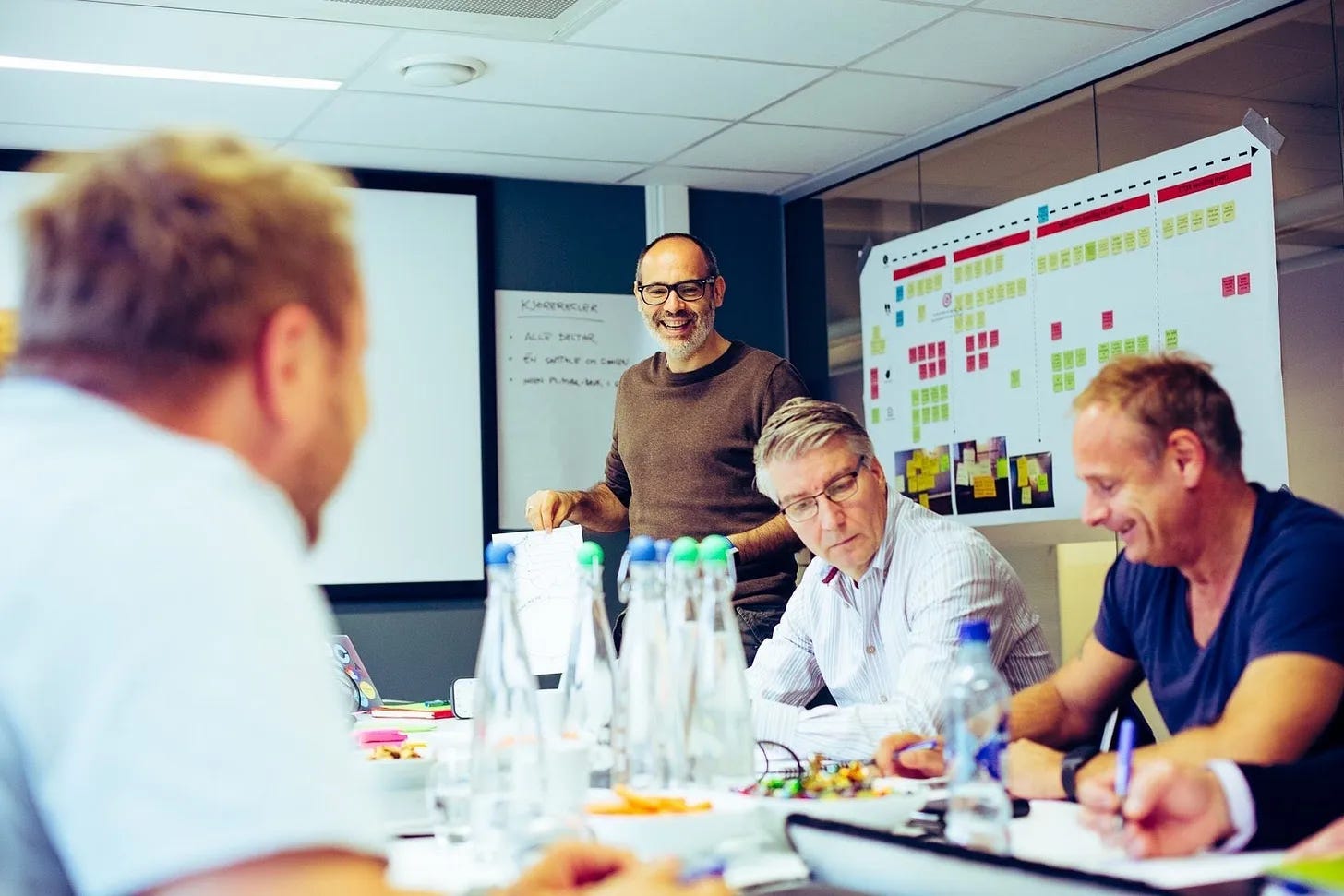
And the workshop itself worked.
Not because of the method.
But because of what happened between people.
We slowed things down.
Created a space where people could actually talk.
Not present. Not defend. Not justify. Just talk.
Then we mapped the journey.
Step by step.
Before. During. After.
What really happens.
Not what is supposed to happen.
And something shifted.
People started seeing things they hadn’t seen before.
Not because it was new.
But because it had never been made visible.
Different ways of working.
Different levels of quality.
Different realities — inside the same service.
Some overwhelmed.
Some underutilized.
Same system. Completely different experiences.
That’s where the real value is.
Not in the Post-its.
In the moment where someone says:
“Wait… is that how you do it?”
That’s the easy part
Here’s the uncomfortable part.
Creating insight is the easy part.
We mapped everything.
Pain points. Bright points. Opportunities.
We structured it.
Prioritized it.
Translated it into concrete actions.
Clear. Visual. Actionable.
The kind of output organizations say they want.
And then…
Silence.
No decisions.
No ownership.
No movement.
And this is where most work dies
Not because the work is bad.
But because the system is not ready for it.
No mandate.
No ownership.
No connection to decisions.
So the energy that was created in the room…
Slowly disappears.
People go back to their reality.
And the next time someone invites them to a workshop, they remember.
Workshop is not the work
This is something I have learned the hard way.
A workshop feels like progress.
It looks like progress.
It can even create alignment in the moment.
But it is not progress.
It is a starting point.
And if nothing is designed after that starting point, nothing happens.
What I do differently now
Today, I am much more careful.
Before I say yes to this kind of work, I ask different questions.
Not about the workshop.
About everything around it.
What decisions will this influence?
Who owns what comes out of it?
What happens the week after?
Where does this connect into actual work?
If those answers are unclear, I don’t just “note it”.
I push it.
Because without that, I know how the story ends.
The role we don’t talk about
Service designers are often seen as facilitators.
The ones who run workshops.
Create nice visuals.
Make things engaging.
But that’s not where the real value is.
As highlighted in many modern service design roles working close to product teams , the expectation is not just to generate insight — but to contribute to real decisions, direction, and development.
That means stepping into uncomfortable spaces.
Challenging unclear mandates.
Asking the questions people don’t want to answer yet.
Connecting the work to actual decisions.
Because if we don’t…
We become very good at creating workshops.
And very bad at creating change and business value.
Final thought
I still believe deeply in workshops.
They can create clarity.
Alignment.
Momentum.
But only if they are part of something bigger.
Otherwise, they become something else.
A well-facilitated illusion of progress.
I hope this post, made sense and you found it useful.
If “HELL YEAH!”, please like it and share it in social media so more people can get can also benefit from it :-)
I would also appreciate if you subscribe, and give some comments here if you wonder something and want to give me some feedback. I would love to read your input here!
If you have a Substack yourself and like my content, I would love for you to recommend “Facili-station” to your subscribers.
Have a nice one!!
Looking for a coach?
In service of those who serve others.
Leadership is hard. Whether you’re stepping into management, leading an entire organization or wondering about your career, the challenges are real: confusing, overwhelming, and sometimes isolating.
I offer a tailored 1:1 or team coaching quarterly program to help you move forward with clarity and confidence. I’ve walked in your shoes, and I’ll work with you to build the resilience and relational skills needed to lead well, beyond just the work.
If this sounds like what you need, let’s talk. Email me at jose@facilistation.com to book a no-strings attached, no-obligation call to talk about your needs and see what I can offer that will fit you the best. Because coaching isn’t expensive. Staying stuck is.
You should see the cost of a life and work that you don’t love... sometimes one good conversation can change your life and your career forever.
Looking for a facilitator and workshop designer?
If you need a workshop designer and facilitator to help you or your team to solve challenges, find solutions, make decisions, and to be more effective an perform better and faster, or a trainer to teach your team on how do this, please contact me at jose@facilistation.com
My workshops are designed to provide the structure required to quickly align and move forward with a plan or idea so you can reclaim time, energy and headspace.
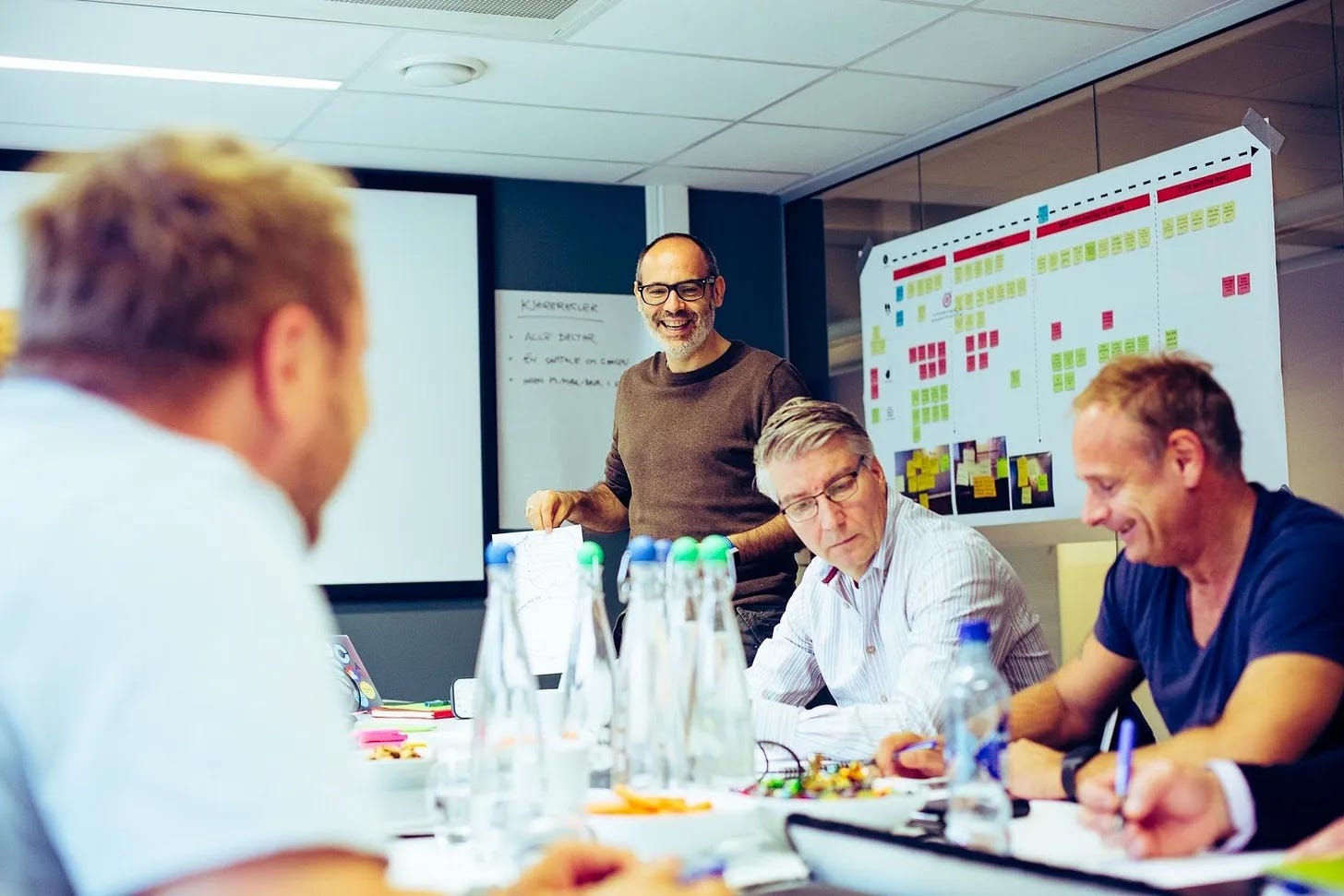
"And the workshop itself worked.
Not because of the method.
But because of what happened between people.
We slowed things down.
Created a space where people could actually talk.
Not present. Not defend. Not justify. Just talk."
Right on. Good observations.