


In my previous post, I wrote about the idea of the leader as a gardener.
Not the one who pulls harder.
Not the one who shouts louder.
But the one who creates the right conditions for things to grow.
Because growth doesn’t come from pressure.
It comes from environment.
That idea isn’t just poetic—it’s deeply practical. In fact, many modern leadership perspectives point in the same direction: leaders don’t “drive performance” directly—they shape the conditions where people can thrive.
But here’s the thing:
If you are a gardener…
you need to observe, listen, and understand your plants.
And in leadership, that starts with better questions.
Not more tools.
Not more frameworks.
Better questions.
Here are three I keep coming back to.
1) “What are you good at… and what do you love doing?”
Most leaders ask about performance.
Very few ask about energy.
But the real leverage sits in the intersection between:
What people are good at
And what they love doing (even if they’re not great at it yet)
Because that’s where growth happens.
Research on motivation consistently shows that people thrive when they can develop mastery and have some level of autonomy in what they do.
But here’s what we often miss:
If someone is good at something but hates it → they burn out
If someone loves something but never gets to do it → they disengage
If someone gets to grow in something they care about → they come alive
As a leader, your job is not to optimize for efficiency.
It’s to design for motivation + mastery over time.
Sometimes that means:
Giving people more of what they’re already great at
And sometimes… giving them space to grow into what they care about
That’s how you grow capability.
And that’s how you grow people.
2) “How are you feeling?”
Simple question.
Often avoided.
Because it opens something we can’t fully control.
But here’s the truth:
People don’t show up to work as “roles.”
They show up as humans in a moment.
And that moment changes everything:
Energy
Focus
Creativity
Collaboration
You can have the best plan in the world…
…but if someone is overwhelmed, distracted, or struggling,
they are not operating at the level you think they are.
A gardener doesn’t treat every plant the same every day.
They look at:
The weather
The soil
The season
Leadership is no different.
Some days your role is to push.
Some days your role is to support.
Some days your role is simply to not add more pressure.
This question is not about being “soft.”
It’s about being accurate.
3) “What is getting in your way—and how can I help?”
This might be the most important one.
Because this is where leadership becomes real.
If you think about it, a gardener doesn’t “grow” plants.
They remove what blocks growth:
Bad soil
Lack of water
Too much shade
External threats
The same applies in organizations.
People are often not underperforming because of lack of talent…
…but because of:
Unclear priorities
Broken processes
Too many dependencies
Organizational friction
Your job is not to “fix the person.”
It’s to fix the system around them.
Or at least… improve it.
Great leaders spend less time asking:
“Why aren’t they performing?”
And more time asking:
“What is making it hard for them to perform?”
And then:
“How can I remove that?”
Bringing it together
If you step back, these three questions are not random.
They map something deeper:
Strengths + passion → Mastery
Emotional state → Capacity
Constraints → Environment
And when those three align…
performance stops being something you chase.
It becomes something that emerges.
A final thought
Leadership is often framed as having answers.
But in reality, it’s much closer to gardening:
You don’t control growth.
You create the conditions for it.
And the quality of those conditions
depends on the quality of the questions you ask.
If this resonates, you might enjoy the original piece:
👉 https://www.facilistation.com/p/the-gardener-leader
And I’m curious:
Which of these three questions do you ask most often—and which one do you avoid?
I hope this post, made sense and you found it useful.
If “HELL YEAH!”, please like it and share it in social media so more people can get can also benefit from it :-)
I would also appreciate if you subscribe, and give some comments here if you wonder something and want to give me some feedback. I would love to read your input here!
If you have a Substack yourself and like my content, I would love for you to recommend “Facili-station” to your subscribers.
Have a nice one!!
Looking for a coach?
In service of those who serve others.
Leadership is hard. Whether you’re stepping into management, leading an entire organization or wondering about your career, the challenges are real: confusing, overwhelming, and sometimes isolating.
I offer a tailored 1:1 or team coaching quarterly program to help you move forward with clarity and confidence. I’ve walked in your shoes, and I’ll work with you to build the resilience and relational skills needed to lead well, beyond just the work.
If this sounds like what you need, let’s talk. Email me at jose@facilistation.com to book a no-strings attached, no-obligation call to talk about your needs and see what I can offer that will fit you the best. Because coaching isn’t expensive. Staying stuck is.
You should see the cost of a life and work that you don’t love... sometimes one good conversation can change your life and your career forever.

Looking for a facilitator and workshop designer?
If you need a workshop designer and facilitator to help you or your team to solve challenges, find solutions, make decisions, and to be more effective an perform better and faster, or a trainer to teach your team on how do this, please contact me at jose@facilistation.com
My workshops are designed to provide the structure required to quickly align and move forward with a plan or idea so you can reclaim time, energy and headspace.
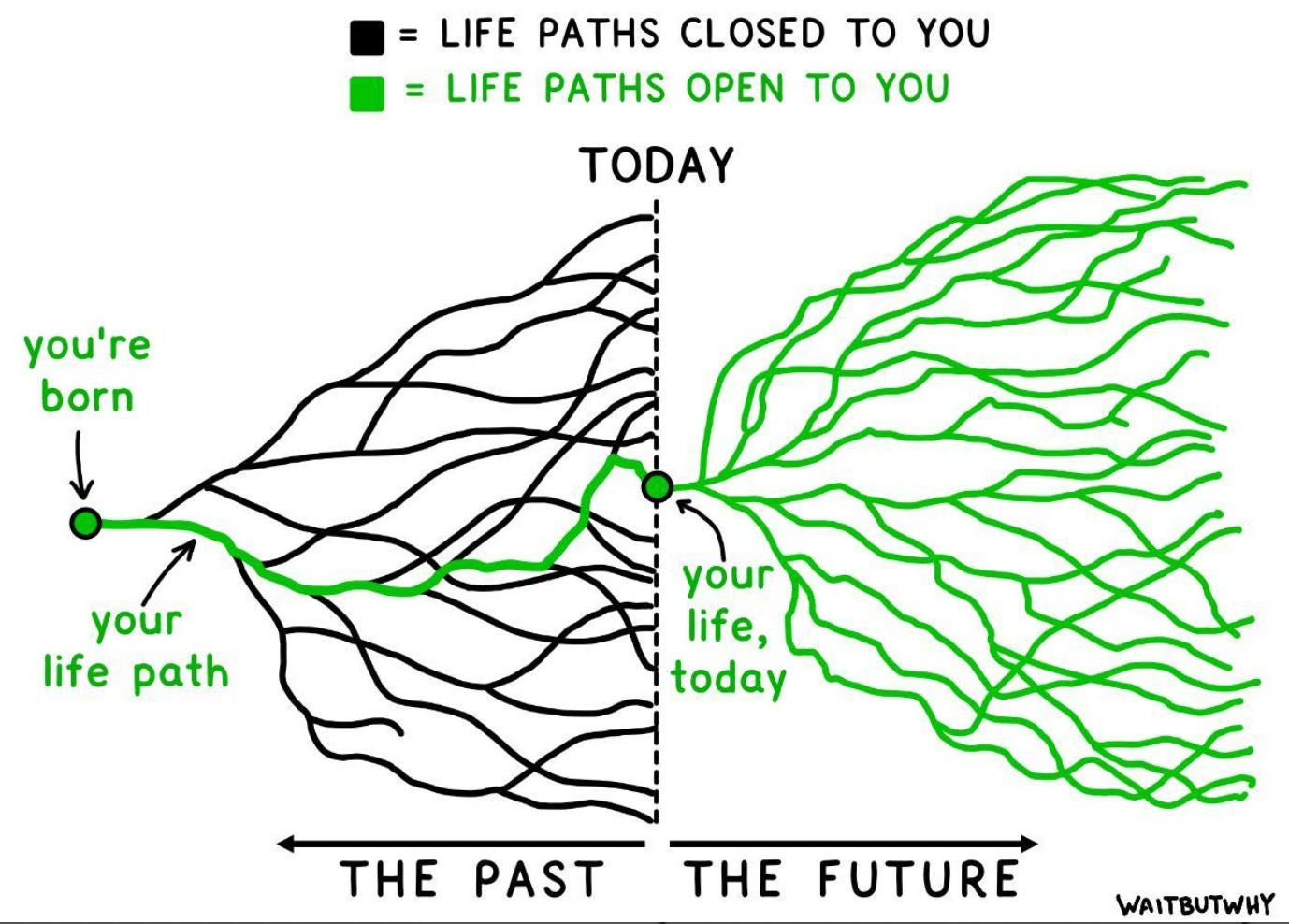
I'm going to print out this picture with life paths closed and open! that's a good one